
AN ARCADEBOT SPECIAL · CHAPTER 1 OF 6 · Back to the TMNT gaming history guide
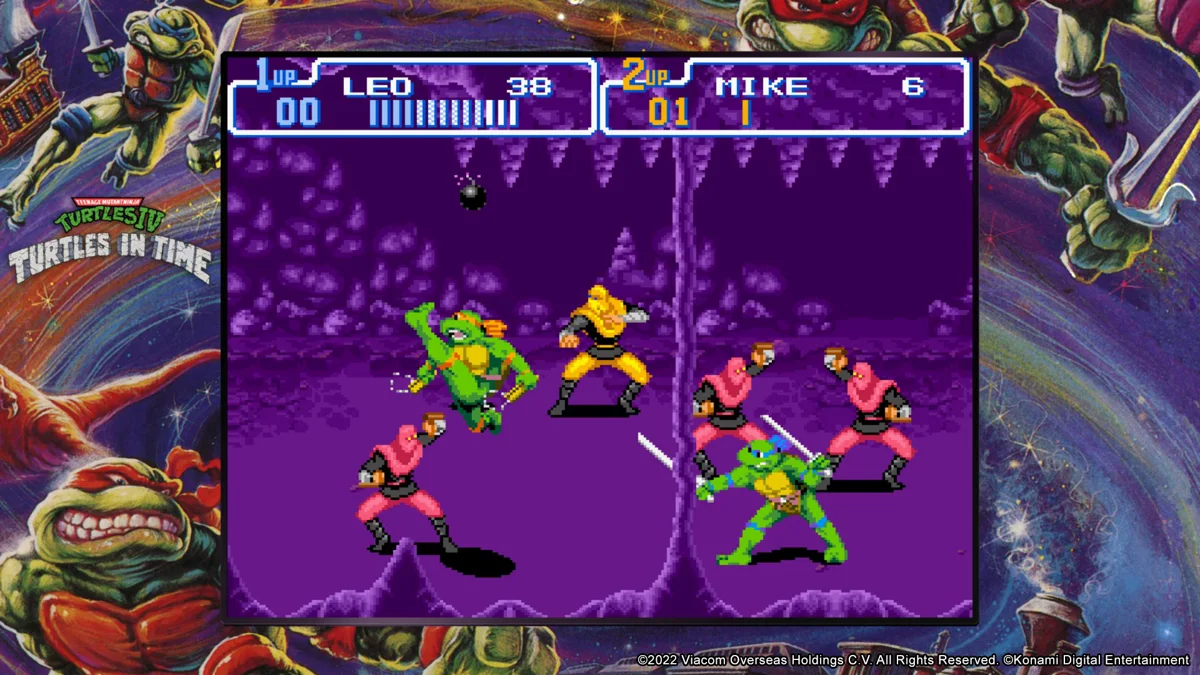
An NES cartridge, four players crowding around an arcade cabinet, and a pizza that restores your health. Before TMNT games branched out into a whole lineup of genres, Konami found several ways to bring the Turtles to life. They did not all involve walking to the right and punching everything in sight.
This opening chapter covers the two 1989 originals, their ports, the Game Boy adventures, and the jump to 16-bit consoles. Dates refer to each version’s debut. When a game reached Japan and North America in different years, both are identified.
1989: Two Games, One Name, Very Different Memories
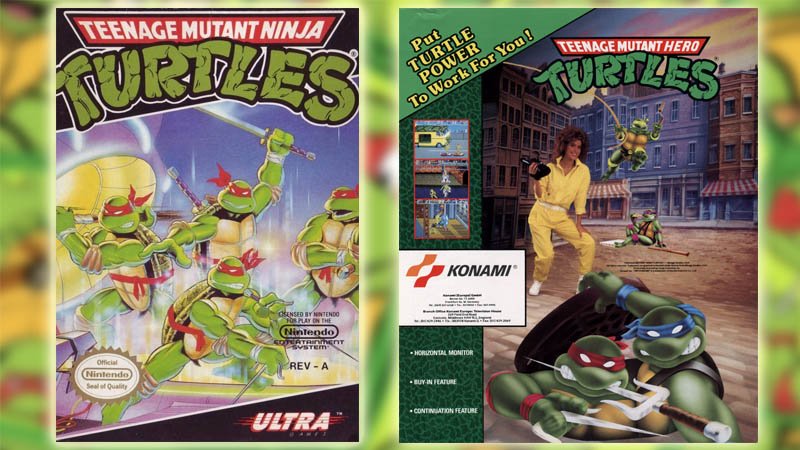
Konami’s Teenage Mutant Ninja Turtles for NES combined an overhead map with side-scrolling platforming and combat. You could switch Turtles, but that did not mean playing with three friends: this was a single-player adventure. Picking Donatello for his staff’s reach was a practical choice, especially when getting close to an enemy could cost you dearly.
The underwater bomb-disarming mission became the game’s most widely shared memory. Its timer, swimming controls, and hazards demanded skills the rest of the game did not teach in quite the same way. That context matters before reducing its difficulty to a joke. This was an adventure that changed the rules and made you learn each situation, rather than a straightforward beat ’em up with poor balancing.
Konami’s 1989 arcade game took a different approach. Its big draw was four players sharing the screen, each controlling a different Turtle. Clear animation, recognizable enemies, and easy drop-in play made the license a social experience. Rescuing April gave you a mission; arguing over who got the pizza was part of the fun.
The distinction clears up a common mix-up: the 1989 NES cartridge is not a port of the arcade game. Sharing a title does not make them two versions of one game. Their separate listings on MobyGames: NES and MobyGames: arcade keep their releases and platforms from getting tangled together.
The Arcade Comes Home: The Arcade Game and The Manhattan Project
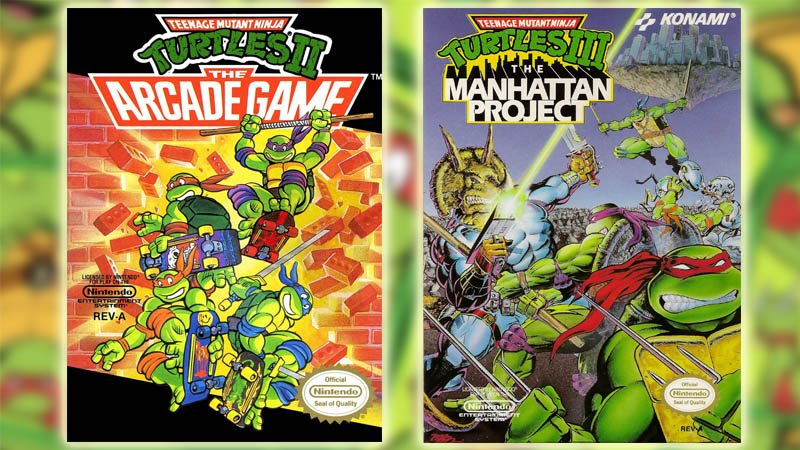
TMNT II: The Arcade Game reached the NES in 1990. It adapted the arcade release, reduced co-op to two players, and added material of its own. That balancing act is what makes it historically interesting: bringing the experience of a more powerful arcade machine to a home console meant doing more than shrinking it down.
TMNT III: The Manhattan Project was not another arcade port. Konami built a new beat ’em up for the NES. It debuted in Japan in 1991 and reached North America in 1992, which explains why both years appear in timelines. Its numbering also varies by region. When tracking down an edition, check the subtitle and platform instead of relying on the Roman numeral alone.
The series also reached home computers. Adaptations of the first game and the arcade release appeared on systems including the Amiga, Atari ST, Commodore 64, Amstrad CPC, ZX Spectrum, and DOS PCs. Hardware limits and port developers varied. European releases used names such as Teenage Mutant Hero Turtles and The Coin-Op!; those titles do not automatically identify entirely new games. The edition, system, and regional release date matter more than the wording on the box.
Game Boy: Three Cartridges, Three Approaches to a Small Screen
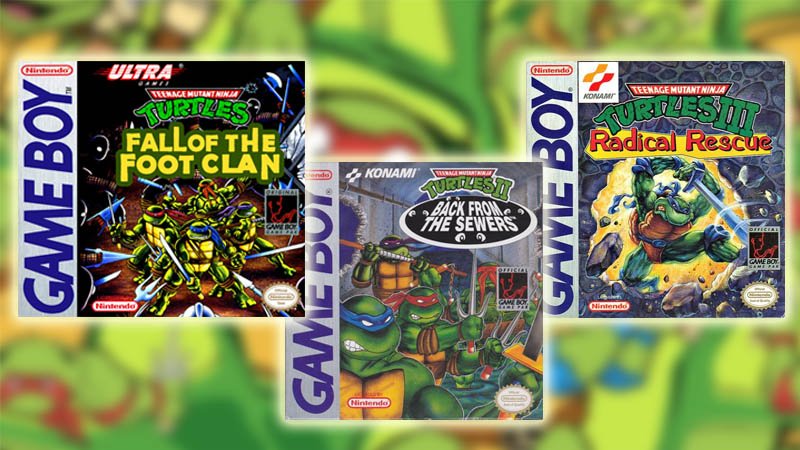
Fall of the Foot Clan (1990) streamlined the action for Game Boy, using side-scrolling stages, platforming, and enemies that remained readable on a monochrome screen. Back from the Sewers (1991) built on that approach with a more ambitious presentation. Neither tried to recreate four-player arcade co-op. Both were designed for one person with a handheld.
The most interesting shift came with Radical Rescue (1993). Rather than simply stringing separate stages together, it created an interconnected world. Rescuing the other Turtles unlocked new areas through their abilities. That exploration structure resembles what we now call a Metroidvania, a useful description of its design rather than a label it needed at launch. Its historical listing documents how it differs from the earlier games.
Turtles in Time: One Journey, Different Stops on Arcade and SNES
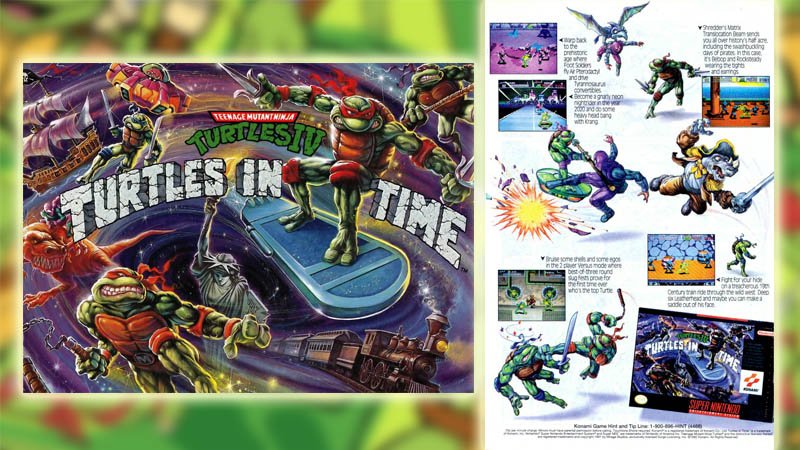
Turtles in Time debuted in arcades in 1991. Konami used time travel to keep changing the scenery without interrupting the flow of combat. Throwing enemies toward the screen captured the game’s personality: easy to understand, larger than life, and fun to watch.
The 1992 Super Nintendo version, titled TMNT IV: Turtles in Time, adapted the material for two players and changed stages and encounters. The Shredder battle that has you hurling enemies into the foreground is one of its distinctive additions. Calling it the arcade game on SNES overlooks the most interesting parts of the adaptation. MobyGames distinguishes the editions, while The Cowabunga Collection preserves their original materials.
The Hyperstone Heist (1992) was Konami’s answer for the Sega Genesis, known elsewhere as the Mega Drive. It reused familiar elements from the Turtles in Time era but arranged them into its own adventure. It is neither the same cartridge under a different name nor an identical SNES port. Comparing the two consoles means looking at their actual games, rather than assuming the boxes promise the same experience.
Manhattan Missions and Tournament Fighters: A Golden Age of Experiments
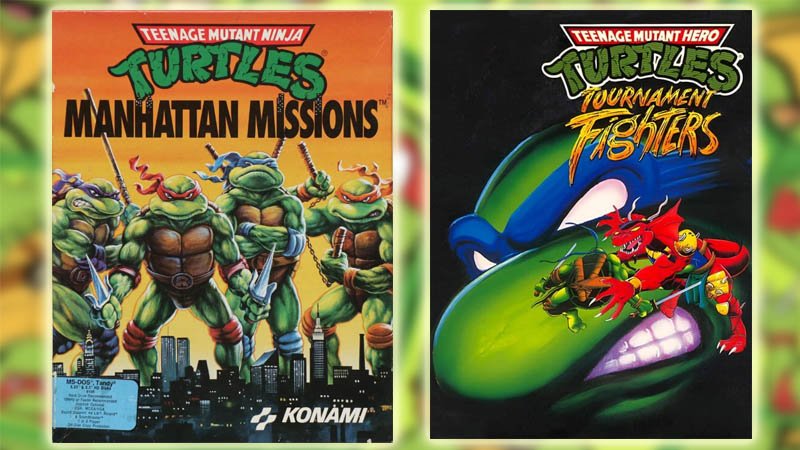
Distinctive Software developed Manhattan Missions (1991) for DOS, with Konami publishing. Its mission-based adventure followed a different structure from the console beat ’em ups. It is a reminder that TMNT’s PC history did not begin with ports in the 2000s. The game’s listing documents its separate identity.
In 1993, Tournament Fighters brought the Turtles into one-on-one fighting on SNES and Genesis. Konami developed both versions, but their characters, stages, and systems differ. The NES release arrived in 1994 and opens the next chapter. These are three distinct games, rather than one game running at different resolutions.
The Releases That Defined This Era
| Game or Version | Debut | Platform and Developer |
|---|---|---|
| TMNT, original adventure | 1989 | NES · Konami |
| TMNT, original beat ’em up | 1989 | Arcade · Konami |
| TMNT II: The Arcade Game | 1990 | NES · Konami; arcade adaptation |
| Fall of the Foot Clan | 1990 | Game Boy · Konami |
| Back from the Sewers | 1991 | Game Boy · Konami |
| Turtles in Time | 1991 | Arcade · Konami |
| Manhattan Missions | 1991 | DOS · Distinctive Software / Konami |
| The Manhattan Project | 1991 in Japan; 1992 in North America | NES · Konami; original game |
| TMNT IV: Turtles in Time | 1992 | SNES · Konami; adaptation with changes |
| The Hyperstone Heist | 1992 | Genesis/Mega Drive · Konami |
| Radical Rescue | 1993 | Game Boy · Konami |
| Tournament Fighters | 1993 | SNES and Genesis · Konami; different versions |
What to Play Today
Start with the 1989 arcade game. To see a home adaptation develop its own personality, try Turtles in Time on SNES. For a less obvious branch of the series, play Radical Rescue. Konami and Digital Eclipse’s The Cowabunga Collection brings together 13 arcade, NES, SNES, Genesis, and Game Boy classics. It does not include every PC game from the era. Check the official lineup to see which versions you are getting.
The golden age left more than one formula behind: cooperative brawlers, demanding adventures, handheld exploration, and fighting games. The next era would try to carry that legacy onto different hardware and into a new generation of Turtles.
Continue the journey: Series guide · Chapter 2: 1994–2006 →