
AN ARCADEBOT SPECIAL · CHAPTER 3 OF 6 · Back to the TMNT gaming history guide
The Turtles returned to theaters in 2007 with a computer-animated movie. Ubisoft published the games that followed, and they raised a question that runs through the series’ history: should a tie-in capture a movie’s look or the feeling of playing as the Turtles? Different platforms offered different answers.
TMNT in 2007: One Movie, Several Experiences
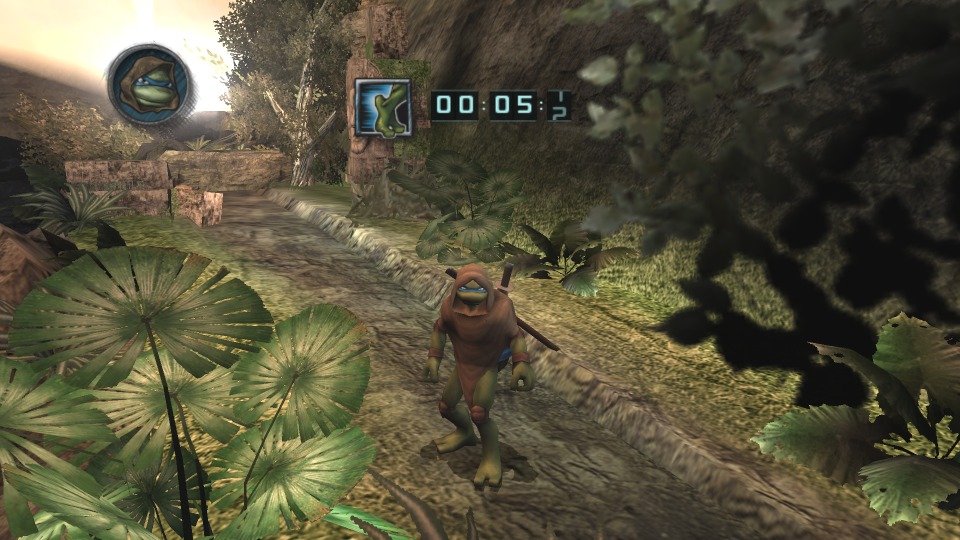
The console and PC versions of TMNT focused on 3D action and platforming. Rooftop jumps, traversal, and character abilities offered another take on the Turtles’ agility. The lineup spanned PS2, GameCube, Wii, Xbox 360, PSP, and PC. Ubisoft Montreal worked on the project, while other versions were handled by different teams within Ubisoft.
This was not a remake of Konami’s classics. Its immediate reference was the 2007 movie, and its campaign was built as a single-player adventure. Having four main characters in the story did not automatically mean four-player arcade-style co-op.
On Game Boy Advance, TMNT returned to side-scrolling combat. The handheld edition’s credits identify Ubisoft Montreal as its developer. It should not be credited to Tribute Games, a studio founded later with personal and creative ties to that tradition. Shared talent and influences do not make two companies the same studio.
The handheld game emphasized contact, positioning, and the impact of each hit. It offers an interesting bridge between 1990s beat ’em ups and the modern games that would later celebrate them. Nintendo DS received a TMNT game of its own, with a different design from the GBA cartridge. The platform list in Ubisoft’s announcement at the time shows the campaign’s reach, rather than proving that every system received an identical game.
1989 Classic Arcade: Bringing Back a Game Without Remaking It
In 2007, TMNT: 1989 Classic Arcade brought the original arcade game to Xbox 360 through Xbox Live Arcade. Digital Eclipse handled the conversion, and Ubisoft published it. Its place in the timeline is as a rerelease: the underlying game was still Konami’s 1989 arcade original.
That distinction matters throughout this series. A port brings a game to another system; a remake rebuilds it; a compilation packages earlier games together. These terms describe what you are playing, rather than assigning a quality score. A well-executed rerelease can carry as much historical value as a new game.
Re-Shelled: Rebuilding Turtles in Time in 3D
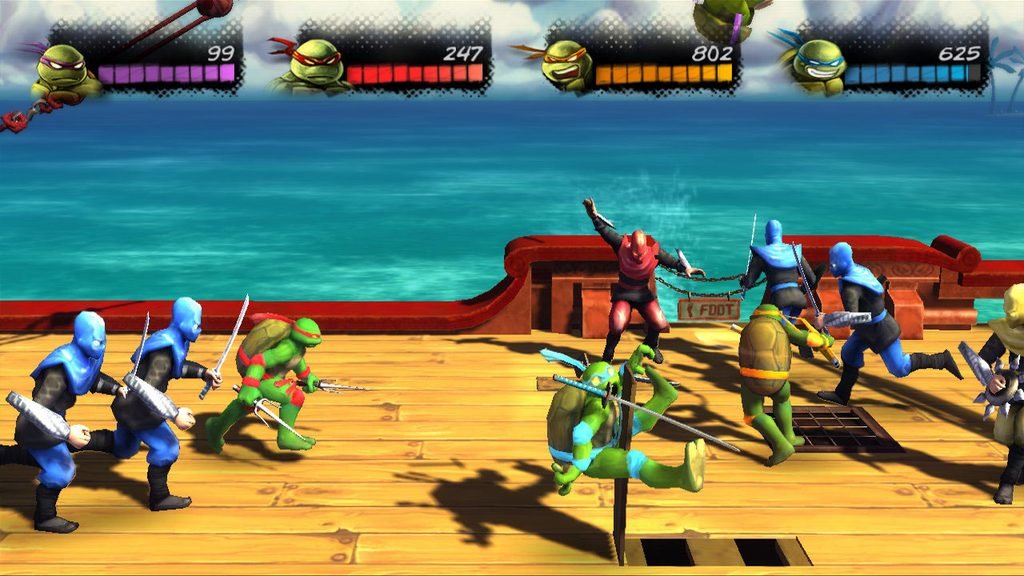
Turtles in Time Re-Shelled (2009), developed by Ubisoft Singapore for Xbox 360 and PS3, rebuilt the 1991 arcade game in 3D. That last detail clears up the biggest misconception: it did not recreate all the content unique to the 1992 SNES version.
Local and online co-op restored the group journey, while the new graphics changed the feel of its environments. The discussion need not come down to whether polygons look worse than pixels. What matters is how presentation, movement, and the readability of combat affect a game originally built around sprites.
It reached Xbox 360 in August 2009 and PS3 in September. The release records for Xbox 360 and PS3, alongside Ubisoft Singapore’s credits, distinguish the dates and development team.
Smash-Up: Making the Stage Part of the Fight
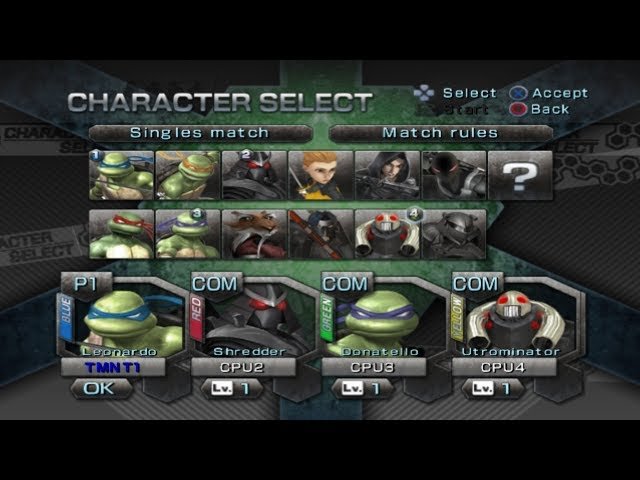
TMNT: Smash-Up (2009), developed by Game Arts and published by Ubisoft for Wii and PS2, took a platform-fighter approach. Up to four participants could battle across stages with changing conditions and hazards, rather than cooperate through waves of enemies.
Movement was about more than reaching the next opponent. It helped determine where and how a fight unfolded. That separates moving through a cooperative level from using a stage as part of a competitive battle. Nintendo’s official page documents the Wii edition and its October 2009 European release. That date should not be confused with its September North American debut.
Arcade Attack: A Nostalgic Name for a New Game
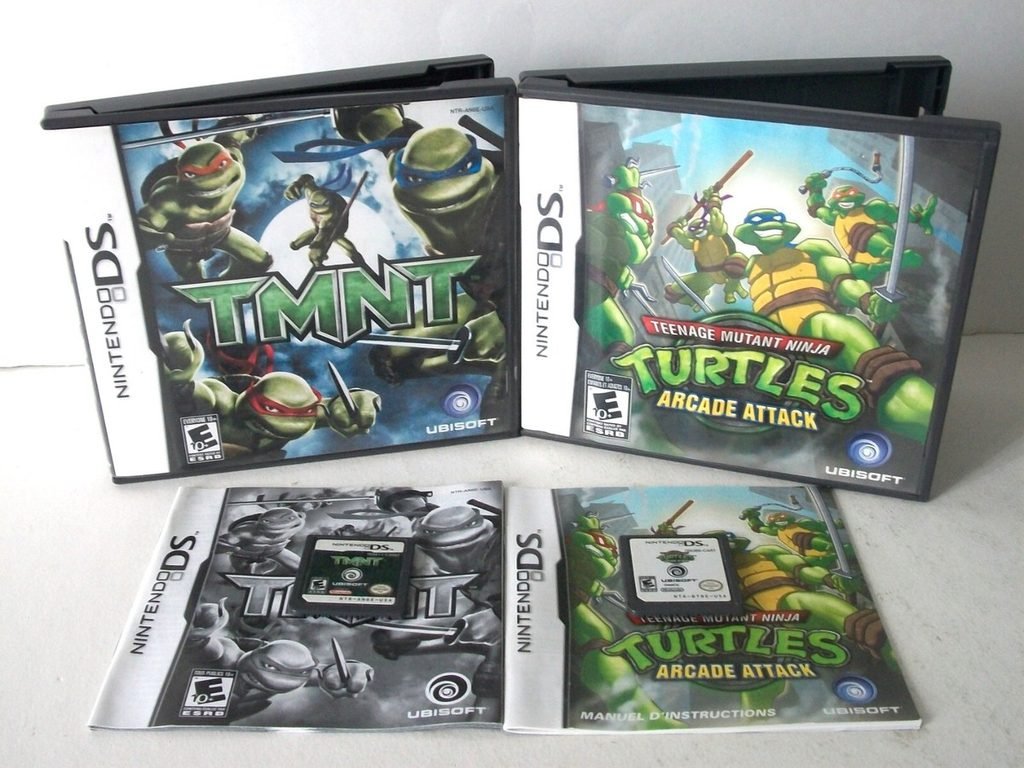
TMNT: Arcade Attack (2009) arrived on Nintendo DS from Ubisoft Nagoya. Despite its title, it was neither a collection of Konami’s arcade games nor an edition of Re-Shelled. It was a new beat ’em up, using a 3D presentation and cooperation between the Turtles to give the action a different shape.
The word arcade promised energy and straightforward action rather than identifying the game’s origin. Its historical record identifies it as a separate DS game. Getting those details right keeps a recommendation from sending someone toward a different title than the one they expected.
Ubisoft’s Different Branches at a Glance
| Release | Platforms | What It Is |
|---|---|---|
| TMNT, 2007 | PS2, GameCube, Wii, Xbox 360, PSP, PC | Movie tie-in built around action and platforming |
| TMNT for GBA, 2007 | Game Boy Advance | Separate beat ’em up; Ubisoft Montreal |
| TMNT for DS, 2007 | Nintendo DS | Separate handheld adaptation |
| 1989 Classic Arcade, 2007 | Xbox 360 | Rerelease of Konami’s arcade game; Digital Eclipse / Ubisoft |
| Turtles in Time Re-Shelled, 2009 | Xbox 360, PS3 | Arcade remake; Ubisoft Singapore |
| Smash-Up, 2009 | Wii, PS2 | Platform fighter; Game Arts / Ubisoft |
| Arcade Attack, 2009 | DS | Original beat ’em up; Ubisoft Nagoya |
A Transition That Looked Back and Tried New Things
Ubisoft tried several approaches in a short period: adapting the movie, rereleasing the past, rebuilding it, and changing genres. None replaced all the others. Comparing their goals tells us more than giving one blanket verdict to everything with TMNT on the cover.
The later years of this period also highlight the fragility of licensed digital releases. A game’s past appearance in a store does not prove it is still available today. This series therefore traces the history of each edition without promising a current purchase option that has not been checked. The next chapter begins with another television reboot and a new run of games published by Activision.
Continue the journey: ← Chapter 2: 1994–2006 · Series guide · Chapter 4: 2012–2021 →