
Doctor Doom is Victor von Doom, the ruler of Latveria, a brilliant scientist and sorcerer, and the Fantastic Four’s defining enemy. Stan Lee and Jack Kirby introduced him in Fantastic Four #5 in 1962. His armored appearance is only part of the threat: he also commands political resources and studies magic.
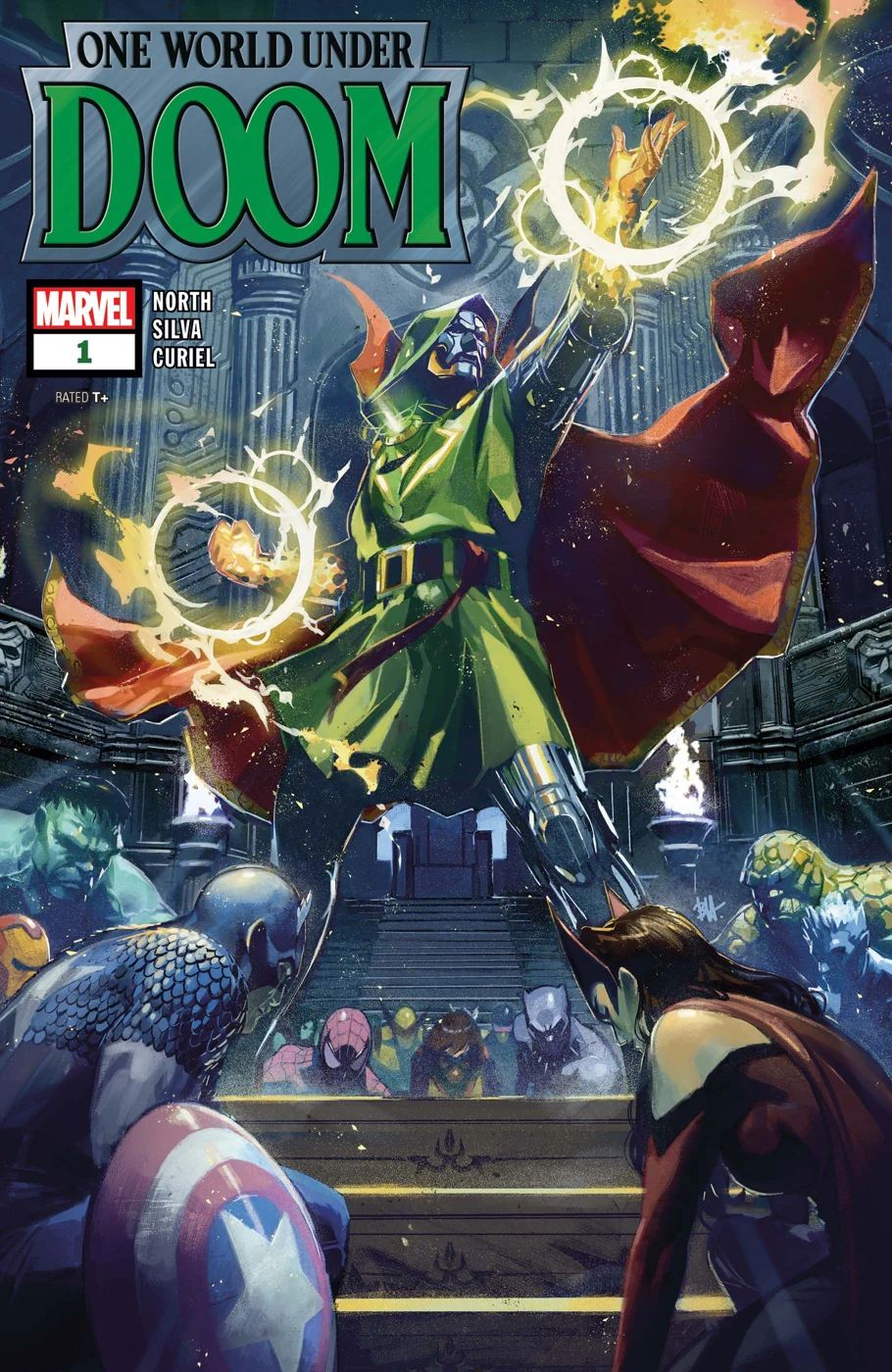
This guide covers the comic book character. Robert Downey Jr. plays Victor in the movies, but a comic book event is not confirmation of what will happen in Avengers: Doomsday.
Doctor Doom at a glance
| Real name | Victor von Doom |
|---|---|
| First appearance | Fantastic Four #5 (1962) |
| Creators | Stan Lee and Jack Kirby |
| Home country | Latveria, a fictional European nation |
| Main rival | Reed Richards / Mister Fantastic |
| Areas of expertise | Science, engineering, robotics, and sorcery |
Marvel’s catalog calls his debut Fantastic Four (1961) #5. The parenthetical year identifies the series, not that issue’s publication year: Doom’s first appearance was published in 1962.
Victor von Doom’s origin
His family and childhood in Latveria
Victor grows up in a persecuted Romani community. His mother, Cynthia, practices magic, and her fate becomes bound to Mephisto. His father, Werner, is a healer. The loss of his parents helps explain why Victor becomes determined never to be powerless again.
His scientific and mystical interests serve a related ambition: overcoming limits he refuses to accept, including death. That makes his story more specific than a generic desire to conquer the world. It also creates room for tragedy without excusing the choices he later makes.
The classic origin is told in Fantastic Four Annual #2 (1964). Ed Brubaker and Pablo Raimondi revisit his formative years in Books of Doom.
The accident, mask, and armor
While studying in the United States, Victor meets Reed Richards and conducts an experiment that ends in an explosion. Rather than accept warnings or responsibility, he blames Reed for his misfortune.
His later travels and training lead to the armored identity readers recognize. Different accounts place different emphasis on his injuries and the mask. A particular version’s details should not be presented as the only explanation across every retelling.
As a character choice, the mask also matters: Doom would rather appear invulnerable than acknowledge vulnerability. It turns a personal wound into an intimidating public identity.
Becoming Latveria’s ruler
Victor returns to Latveria and takes power. He has a country, a castle, and resources, rather than merely a secret laboratory. His actions therefore affect people who live under his rule as well as the heroes who fight him.
One useful way to read his political stories is to ask whether being capable of solving a problem grants anyone the right to control everyone else. Doom frequently sees himself as a protector. The coercion behind that claim is central to his conflict with the heroes.
What powers does Doctor Doom have?
His usual abilities are a combination of knowledge, training, and equipment. They do not all come from a single accident.
- Scientific genius: he invents machines and weapons that challenge Marvel’s other leading scientists.
- Powered armor: protection and offensive systems, including energy attacks. Capabilities depend on the suit and story.
- Sorcery: Doom studies and uses genuine magic. He is not simply making technology look supernatural.
- Doombots: robotic doubles that can carry out his plans and make it harder to establish whether the real Victor is present.
- Strategy and state resources: his reach extends beyond what he can accomplish in a personal fight.
The crucial distinction is between his regular capabilities and extraordinary power he obtains in a particular storyline. A feat performed with stolen cosmic power does not prove he can repeat it with his ordinary armor.
That distinction matters in Doom-versus-Thanos debates. A meaningful comparison identifies both versions, their equipment, and the circumstances. A single encounter under exceptional conditions is not a universal ranking.
Why does Doctor Doom hate Reed Richards?
Reed threatens Victor’s belief in his own superiority. Winning territory or building a machine is not always enough: Doom wants his rival to acknowledge that he is better.
The contrast also concerns how they deal with other people. Reed’s place in a family creates possibilities for collaboration. Victor often treats reliance on others as weakness. Conflicts become especially revealing when the solution requires trust, responsibility, or admitting a mistake.
His rivalry begins with the Fantastic Four but extends across Marvel. He also clashes with the Avengers and other heroes; calling him only a local enemy of one team understates the character’s reach.
Doctor Doom, Secret Wars, and Iron Man
Both major versions of Secret Wars, from 1984 and 2015, give Doom a significant role. Their different settings let the stories examine his relationship with power on a larger scale.
He also takes on the Iron Man identity in Infamous Iron Man, the 2016–2017 series by Brian Michael Bendis and Alex Maleev. Victor pursuing a heroic identity does not make Victor and Tony Stark the same person.
That distinction is useful when discussing Downey’s casting. See why Robert Downey Jr. is playing Doctor Doom for the difference between an actor returning and a character returning.
The best starting points for Doctor Doom comics
- Fantastic Four #5 (1962): his debut, with invention already central to his threat.
- Fantastic Four Annual #2 (1964): the classic origin.
- Books of Doom #1–6 (2005–2006): an approachable miniseries focused on his development.
- Doctor Strange & Doctor Doom: Triumph and Torment (1989): Roger Stern and Mike Mignola explore the importance of magic and his mother.
- Secret Wars #1–9 (2015): a more demanding starting point, centered on a multiversal crisis and his relationship with Reed.
- Infamous Iron Man #1–12 (2016–2017): his attempt to build a heroic identity while carrying his past.
These are reading options, not movie homework. Choose Books of Doom for a focused introduction or Triumph and Torment if the mystical side interests you most. Start with the core story before committing to decades of appearances.
How the movie versions differ
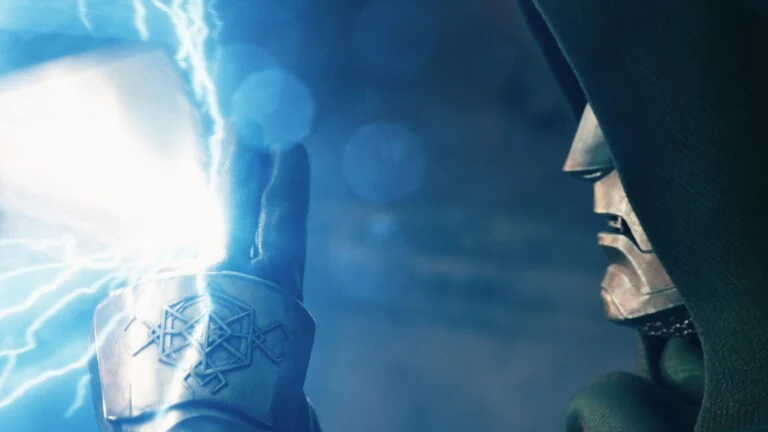
Julian McMahon played Victor in the 2005 and 2007 Fantastic Four movies. Toby Kebbell played him in the 2015 film. Those versions are not a required biography for Downey’s incarnation.
An adaptation can preserve the mask and rivalry while changing the origin or abilities. Keeping those interpretations separate is more useful than inventing connections among them. For the new movie’s context, use our Doomsday watch guide.
Common questions
Is Doctor Doom a robot?
Victor is a person. Doombots are robotic doubles; mistaking one for him is part of their narrative purpose.
Is Doctor Doom a mutant?
The classic Victor von Doom is not an X-Men mutant. His usual threat is built around science, sorcery, and resources.
Is Doctor Doom a DC character?
No. Doctor Doom is a Marvel character. Doomsday, Superman’s enemy, is a different character from DC. The Avengers movie’s title does not establish a connection to him.