TMNT manga exists, and it is more than one Japanese adaptation. The Teenage Mutant Ninja Turtles appeared in manga based on their classic cartoon, the transformation-focused Super Turtles, Hiroshi Kanno’s Mutant Turtles Gaiden, and humorous stories in Comic BomBom. These works do not share one continuous storyline.
This guide explains how to tell those publications apart, where the Japanese anime fits, and what to check when looking for a copy. A familiar English title on a listing does not necessarily mean the book itself is in English.
Contents: Mutant Turtles and the other manga adaptations · Super Turtles, the anime and reading questions.
The franchise began with Kevin Eastman and Peter Laird’s American comics, but its success also led to stories made for Japanese readers in the 1990s. Some retold television adventures. Others used transformations and toy concepts or adopted the visual rhythms of children’s gag manga.
That variety is the reason a search for “Ninja Turtles manga” can produce books that look very different from one another. The publisher, creator, original Japanese title and volume number matter more than a seller’s broad description.
Mutant Turtles: the classic cartoon becomes manga
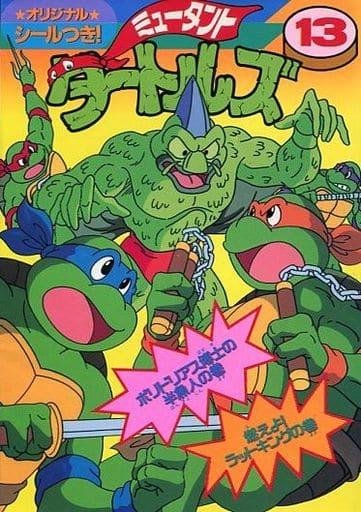
Japanese title: ミュータント・タートルズ. The franchise bibliography records 15 installments adapting the original American animated series, with contributors including Tsutomu Oyamada and Yoshimi Hamada.
Leonardo, Raphael, Donatello, Michelangelo, Splinter, April O’Neil, Shredder and Krang belong to a recognizable cartoon setting here. These adaptations should not be confused with the darker original Mirage comics simply because both feature the same four brothers.
The name Mutant Turtles also appears on other Japanese publications. It is therefore a starting point for identifying a book, rather than proof that every volume belongs to this adaptation series. Check the credits and the actual cover before assigning a reading order.
Mutant Turtles Gaiden: Hiroshi Kanno’s separate story
Mutant Turtles Gaiden (ミュータント・タートルズ外伝) is a self-contained reinterpretation by Hiroshi Kanno, published by Dengeki Comics. It is not a continuation of all the preceding Japanese adaptations.
The first three chapters appeared under the shorter Mutant Turtles name in Dengeki Shounen, a supplement to Dengeki Super Famicom, beginning in 1994. The collected book arrived in 1995 and added a fourth chapter. The word gaiden means a side story; in this case it helps identify the collected work.
Search by both the Japanese title and the creator’s name. Fan-made Turtles projects with similar names also exist, so a title match alone is not enough to identify this professionally published manga.
Comic BomBom and its different TMNT publications
Kodansha’s children’s magazine Comic BomBom carried its own Turtles stories. Titles associated with that magazine include Mutant Turtles, Mutant Ninja Turtles 3 and Mutant Turtles 4/4. Humor and gag storytelling are central to these versions. The 4/4 title also used the four-panel comic format called yonkoma.
You may also encounter Mutant Turtles ’95 and Mutant Turtles ’96. Those labels identify publishing phases, rather than new American television seasons. A magazine chapter and a collected paperback are different objects, even when a catalog groups them under the same character name.
There is more than one Japanese TMNT III adaptation
Teenage Mutant Ninja Turtles III, the movie in which the brothers travel to Japan’s past, received different Japanese manga treatments. Yasuhiko Hachino’s adaptation associated with Dengeki Comics is separate from the humorous Comic BomBom adaptation.
This matters when buying or cataloging a book: “Turtles 3” does not uniquely identify an edition. Compare the author, publisher and cover. Do not treat two adaptations of the same movie as consecutive chapters of one manga.
Super Turtles: transformations and Japanese superhero ideas
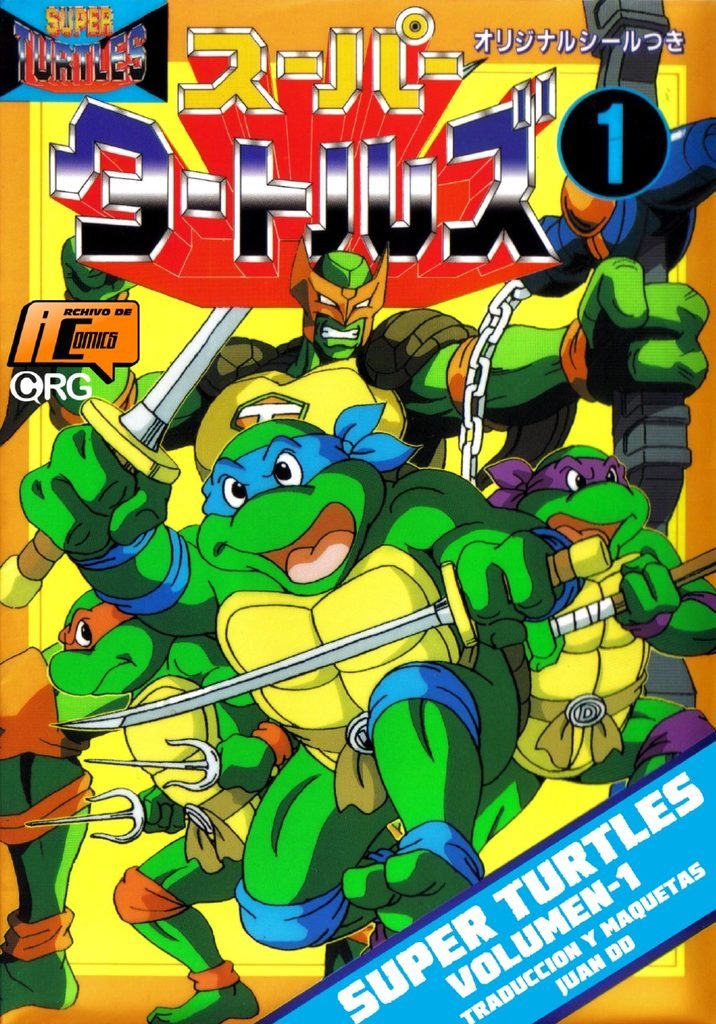
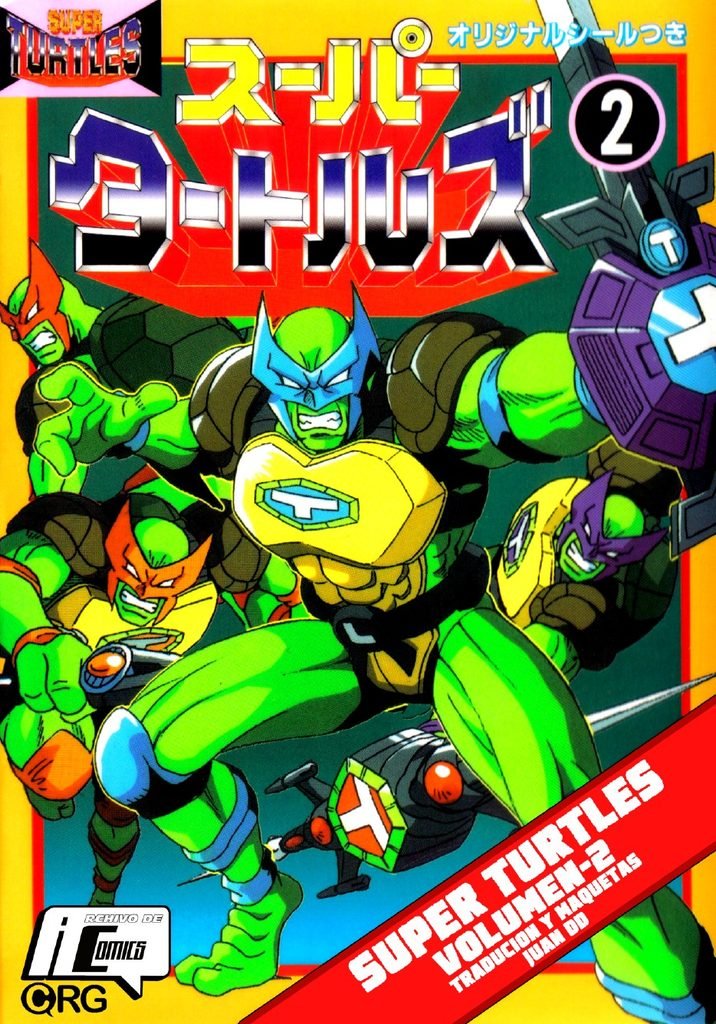
Super Turtles (スーパータートルズ) is a three-part manga miniseries connected to the Japanese Supermutant Turtles toy concept. The franchise bibliography lists Hidemasa Idemitsu, Tetsurō Kawade and Toshio Kudō among its creators.
Instead of limiting the brothers to their familiar appearance, this approach gives them enhanced bodies and spectacular transformations. It shows how the characters could be reimagined for a market already familiar with transforming superheroes and interconnected toy lines.
Is Super Turtles the same as the Japanese anime?
No. The manga is a printed comic, while Mutant Turtles: Choujin Densetsu-hen is a two-episode Japanese original video animation released in 1996. They are related to the same Japanese merchandising era, but they are different works and formats.
The anime features MutaStones, Super Turtles transformations and the brothers combining into Turtle Saint. Its first episode uses the Super Turtles concept, while the second introduces Metal Turtles armor. Watching those two episodes does not cover every Japanese Turtles manga, and they are not a regular additional season of the 1987 American series.
What order should you read TMNT manga in?
There is no single required order across all these publications. Choose the cartoon adaptations for a familiar starting point, Super Turtles for transformations, or Gaiden for an independent reinterpretation. Follow the printed volume numbers within an individual collection. For magazine material, identify the publication and issue before arranging chapters.
Can you read TMNT manga in English?
Keep the language of the actual book separate from the language of its listing. An English product description may advertise a Japanese-language original. Likewise, a fan translation should not be described as an official English edition. Before buying, ask for pictures of the cover and interior, then check the creator, volume number and language.
Are these manga part of Mirage or IDW continuity?
They do not belong to the main IDW continuity or automatically continue the Mirage story. Treat each adaptation on its own terms. The histories of Leonardo and Raphael vary between versions; a transformation or event in one work should not be transferred to every incarnation.
References for identifying the books
The Mutant Turtles Gaiden bibliography, Comic BomBom publication record, Super Turtles entry and Japanese anime record help distinguish similarly named comics and separate printed manga from animation.