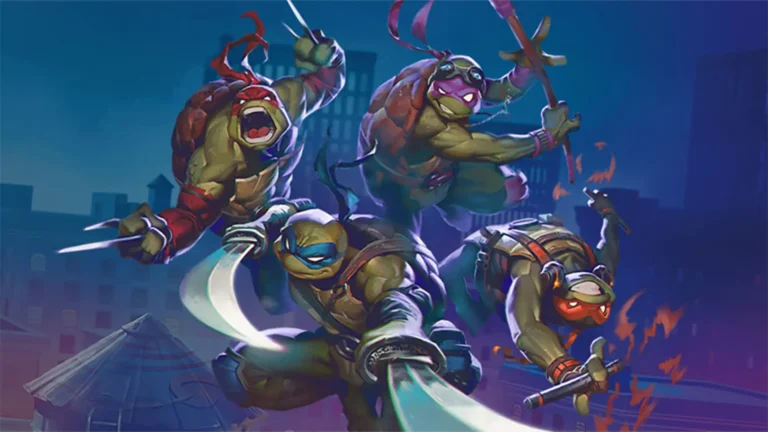
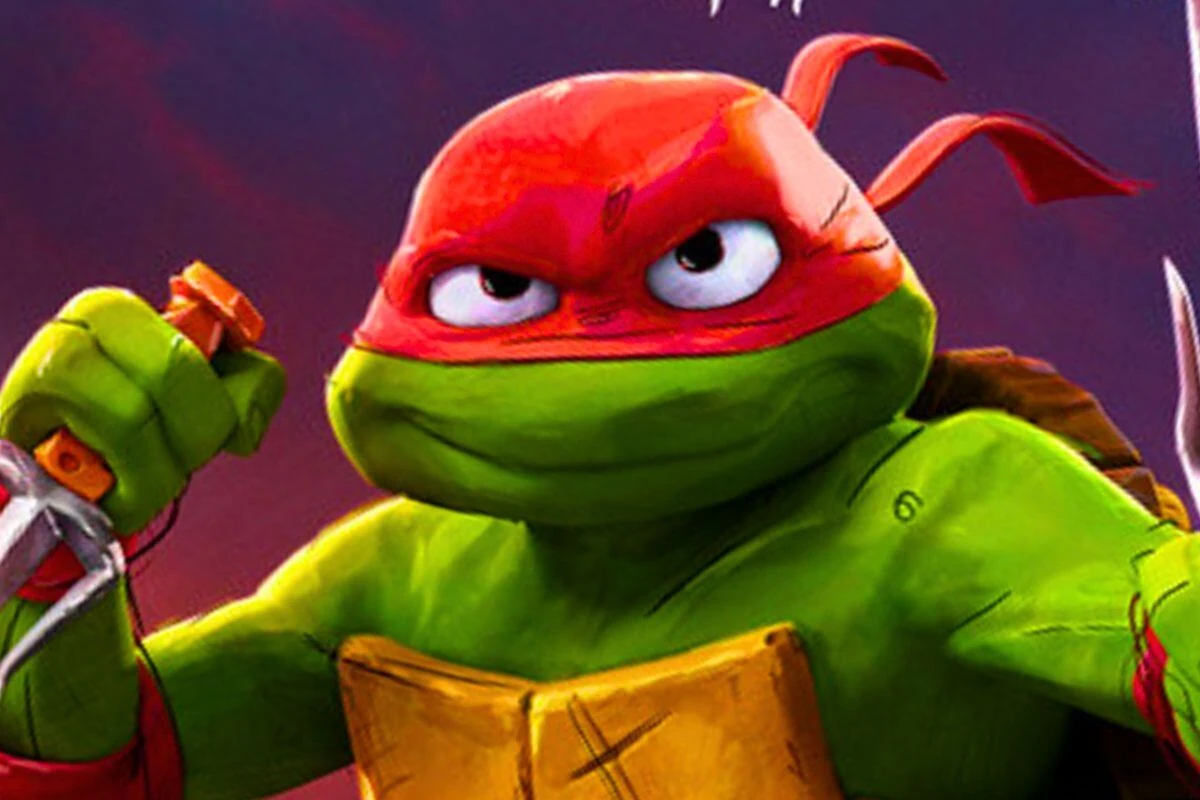
Raphael is the Ninja Turtle with the red mask and the twin sai. He is usually the first brother to step between his family and a threat, and the first to argue with Leonardo when he thinks the plan is wrong. In the original comic, that instinct costs him fights and earns him a friend. In Rise, it makes him the team’s first leader. In The Last Ronin, the consequences are far worse.
Every adaptation makes its own choices about Raph’s origin, family and weapons. This guide separates those stories, starting with the 1984 Mirage comic and following the character through the comics and games of 2026.
In this guide
- Who is Raphael from the Teenage Mutant Ninja Turtles?
- How Kevin Eastman and Peter Laird created Raphael
- Raphael’s origin across Mirage, IDW, television and film
- Why Raphael gets angry and what he does about it
- How to recognize Raphael across the eras
- Raphael’s weapons, the sai, and his fighting style
- Raphael across the comics, cartoons and movies
- Raphael’s relationships with Leonardo, Donatello, Michelangelo and Splinter
- Casey Jones, April O’Neil and Raphael’s love interests
- Shredder, the Foot Clan and Raphael’s personal rivals
- Key moments in Raphael’s history
- How Raphael plays in TMNT video games
- Raphael action figures and collectibles
- Who voices and plays Raphael?
- Details worth looking for on a rewatch or reread
- What Raphael brings to the Ninja Turtles
- Frequently asked questions about Raphael
Who is Raphael from the Teenage Mutant Ninja Turtles?
| Fact | Raphael at a glance |
|---|---|
| Name | Raphael, usually shortened to Raph. Spanish versions also call him Rafael. He generally has no surname. |
| First appearance | Teenage Mutant Ninja Turtles #1, Mirage Studios, May 1984. |
| Creators | Kevin Eastman and Peter Laird. |
| Species and design | A mutant turtle with green skin and a red mask in his best-known designs. Species, build and markings vary across adaptations. |
| Weapons and skills | Twin sai, ninjutsu, close combat, stealth and improvisation. He starts Rise with twin tonfa. |
| Family and team | Splinter is his teacher and father figure. Leonardo, Donatello and Michelangelo are his brothers. He fights alongside the Ninja Turtles and leads in some versions. |
| Allies and enemies | Casey Jones and April O’Neil are recurring allies. Shredder and the Foot Clan are recurring enemies. Partners and personal rivalries depend on the continuity. |
How Kevin Eastman and Peter Laird created Raphael
In late 1983, Kevin Eastman and Peter Laird began drawing turtles with martial arts weapons to make each other laugh. The idea turned into a self-published black-and-white comic from Mirage Studios. Eastman and Laird made the first issue together, and the first print run numbered 3,000 copies. Raphael was on the team from issue #1. His name comes from the Renaissance painter Raphael, also known as Raffaello Sanzio da Urbino.

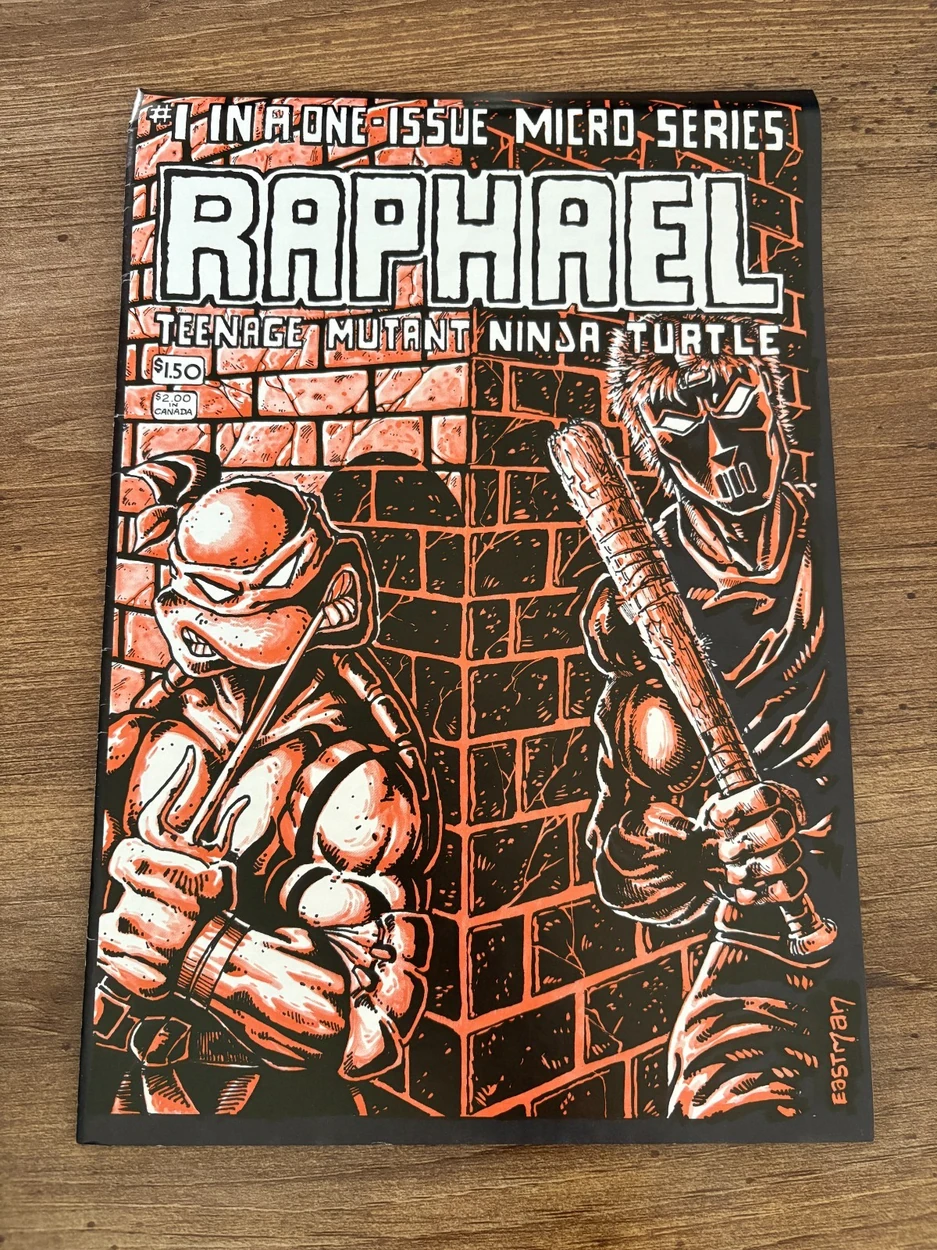
The weapon was an easier clue than the color. The original interior was black and white, and when Mirage showed the four brothers wearing red masks in color art, the twin sai marked out Raphael. The 1987 cartoon and the Playmates toy line established four different colors, and Raph kept red. Some later covers, reprints and adaptations make different choices.
The first issue introduces four brothers willing to use lethal force. Raphael’s personality comes into sharper focus in his 1985 one-shot. He goes too far during a sparring session with Michelangelo and leaves the lair. He then meets Casey Jones and has to stop him from going too far as a vigilante. That comic sets up a pattern that later versions revisit: Raph can recognize another person’s worst impulse even when he has trouble managing his own.
Mirage’s first issue · Mirage’s Raphael one-shot · ArcadeBot’s guide to how the Turtles were created · The meaning of the Turtles’ mask colors
Raphael’s origin across Mirage, IDW, television and film
In Mirage, four small turtles and a canister of mutagen end up in the New York sewers. Splinter, once the pet rat of ninja Hamato Yoshi, comes into contact with the same substance. He raises the turtles and teaches them the techniques he observed Yoshi practicing. The brothers train together from a young age. The first issue sends them after Oroku Saki, the man responsible for Yoshi’s death.
The 1987 cartoon makes Hamato Yoshi himself into Splinter. The ooze turns him into a rat and turns the four turtles into humanoids. The 2012 series also starts with a human Yoshi, with a different history for him, his daughter and the mutagen. The 1990 movie returns to Splinter as Yoshi’s rat and shows the canister in a flashback to his life in the sewers. The second film identifies TGRI as the company connected to the ooze.
IDW combines a StockGen experiment with the reincarnation of Hamato Yoshi and his four sons. Raphael is separated from his family during the animals’ escape. His brothers have time together while he has to survive on his own. Mutant Mayhem keeps the four together under Splinter, who learns martial arts from videos and raises them to fear the human world. Raph’s early distrust makes sense in both stories for different reasons.
Why Raphael gets angry and what he does about it
Raphael has a hard time waiting when somebody is in danger. That can save a brother or turn a rescue into a fight the team was unprepared to win. In the 1990 movie, he helps April and heads back out alone after arguing with Leonardo. When the Foot attacks him on April’s rooftop, the rest of the family has to live with the consequences and care for him.
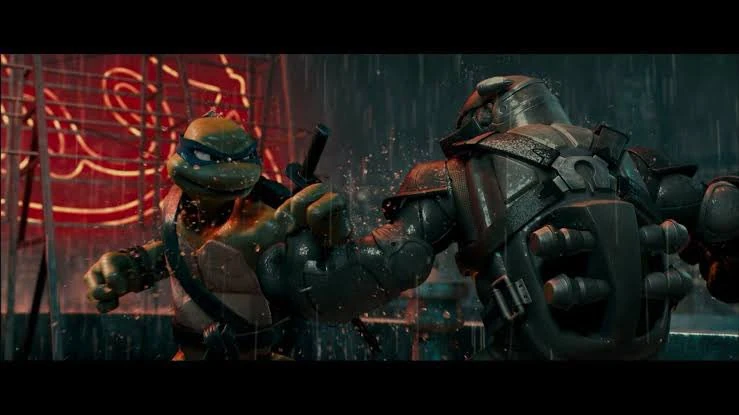
His arguments with Leonardo usually start with a real decision. Should the team move now? Who has the right to give the order? Who gets stuck taking the risk? In TMNT (2007), Leonardo comes back from training abroad, while Raph has already been patrolling as the Nightwatcher. Their rooftop fight is also an argument about who showed up for the family when it fell apart. Raph realizes how far he has taken the fight and later admits his responsibility to Splinter. He still values his independence. He also needs his family, and that conversation gives him the space to say so.
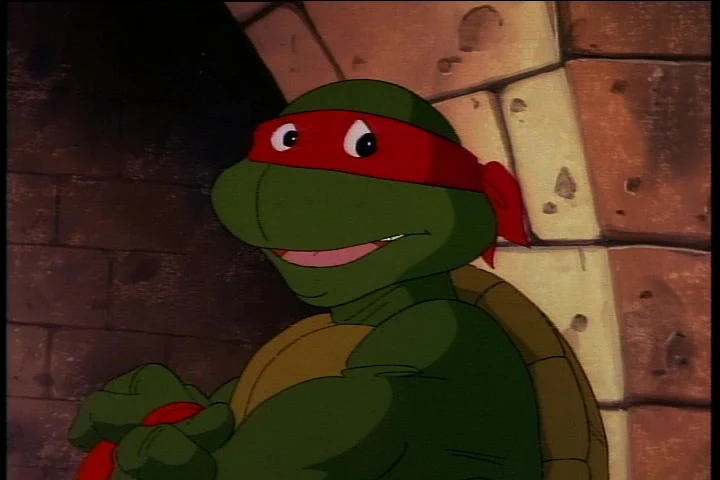
His humor changes by version. In 1987, Rob Paulsen’s Raph makes dry remarks about the villains and talks directly to the audience. Sean Astin plays a more guarded Raphael in 2012, but scenes with his pet turtle Spike let him be openly affectionate. Rise gives him the excitement and pride of leading his brothers, plus the trouble of learning to delegate. Those distinctions matter more than deciding which version has the shortest temper.
How to recognize Raphael across the eras
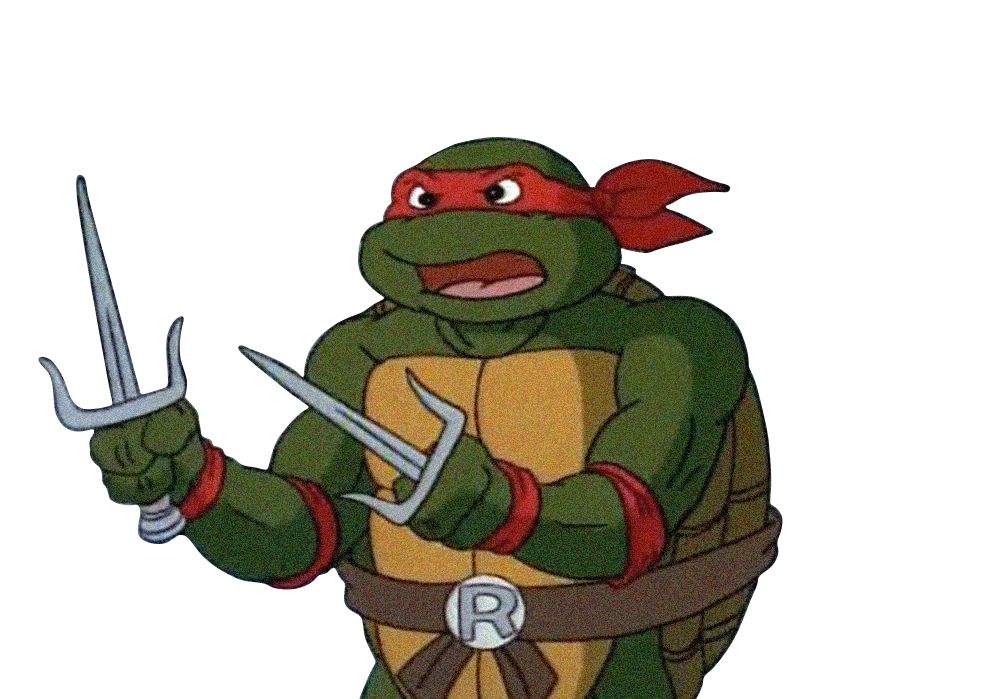
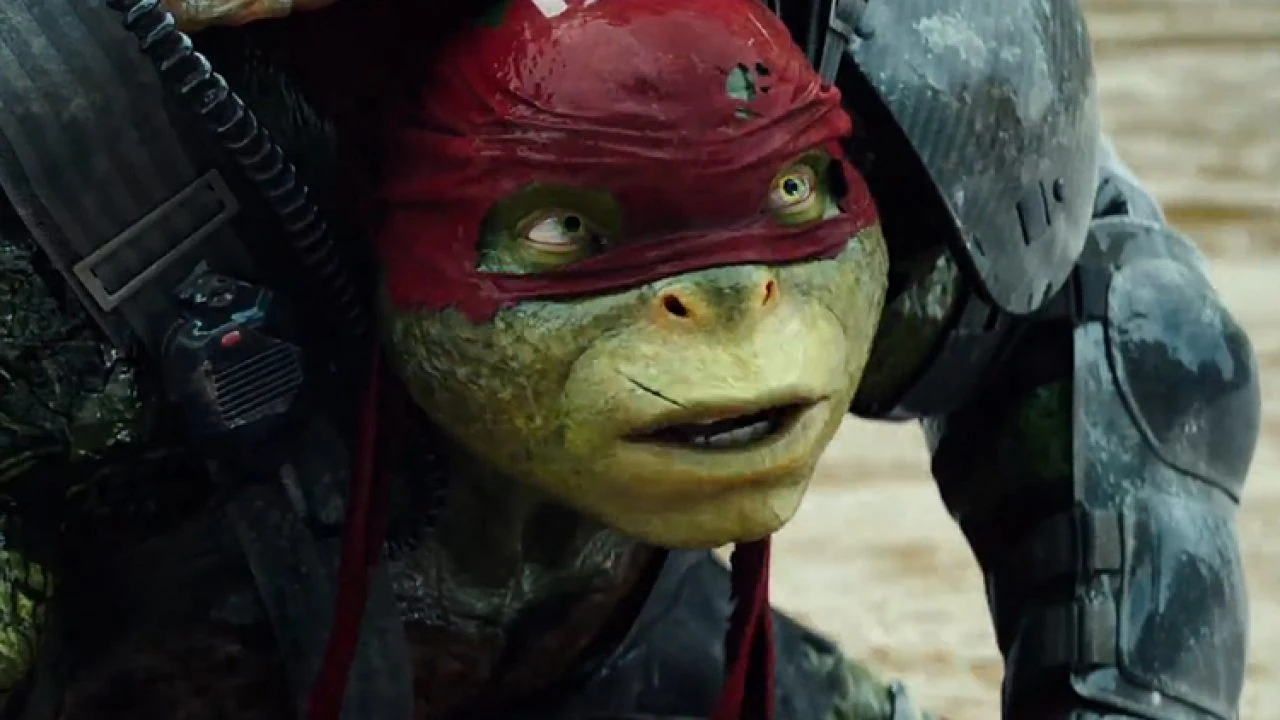
The four brothers have similar silhouettes in the 1987 series. Red, twin sai and a belt initial help identify Raph. The 1990 suit adds volume and texture. The 2012 design gives him a mark on the plastron, the part of a turtle’s shell that covers its chest. Rise broadens his shoulders, enlarges his head and gives the shell its jagged edges. Mutant Mayhem returns to a teenage silhouette with sharper angles and visible animated linework. Height, markings and the shade of green vary with each production.
Raphael’s weapons, the sai, and his fighting style
Raphael usually carries two sai. A traditional Okinawan kobudō sai has a central shaft, two curved side prongs and a grip. The central shaft is usually blunt and has no cutting edge like a knife. The prongs can help control or deflect another weapon, and the metal body can strike. Similar tools appear elsewhere in Asia, including the Japanese jitte, but their resemblance does not establish a single origin. A pair allows one side to guard while the other acts. In fiction the weapons can look unusually sharp or catch a sword with suspicious ease.
Raph trains in stealth and hand-to-hand combat under Splinter. He tends to close distance and improvise. Individual versions add equipment or powers. In Rise, his twin tonfa channel red energy that extends his attacks. He later returns to sai. In TMNT (2007), the armor, motorcycle and chain-linked weapons are part of his Nightwatcher gear. Games assign their own rules to his speed, reach and damage.
Okinawa Karate Federation · Nickelodeon’s Rise character reveal
Raphael across the comics, cartoons and movies
| Version | What makes this Raph different | Where to start |
|---|---|---|
| Mirage (1984) | A quick-tempered vigilante who has to rein in another vigilante. | TMNT #1 and Raphael #1. |
| Archie (1988–1995) | Falls for Ninjara and meets an older version of himself. | TMNT Adventures #28 and The Future Shark Trilogy. |
| Image (1996–1999) | Suffers a facial injury and assumes Shredder’s identity. | Volume 3 or Urban Legends. |
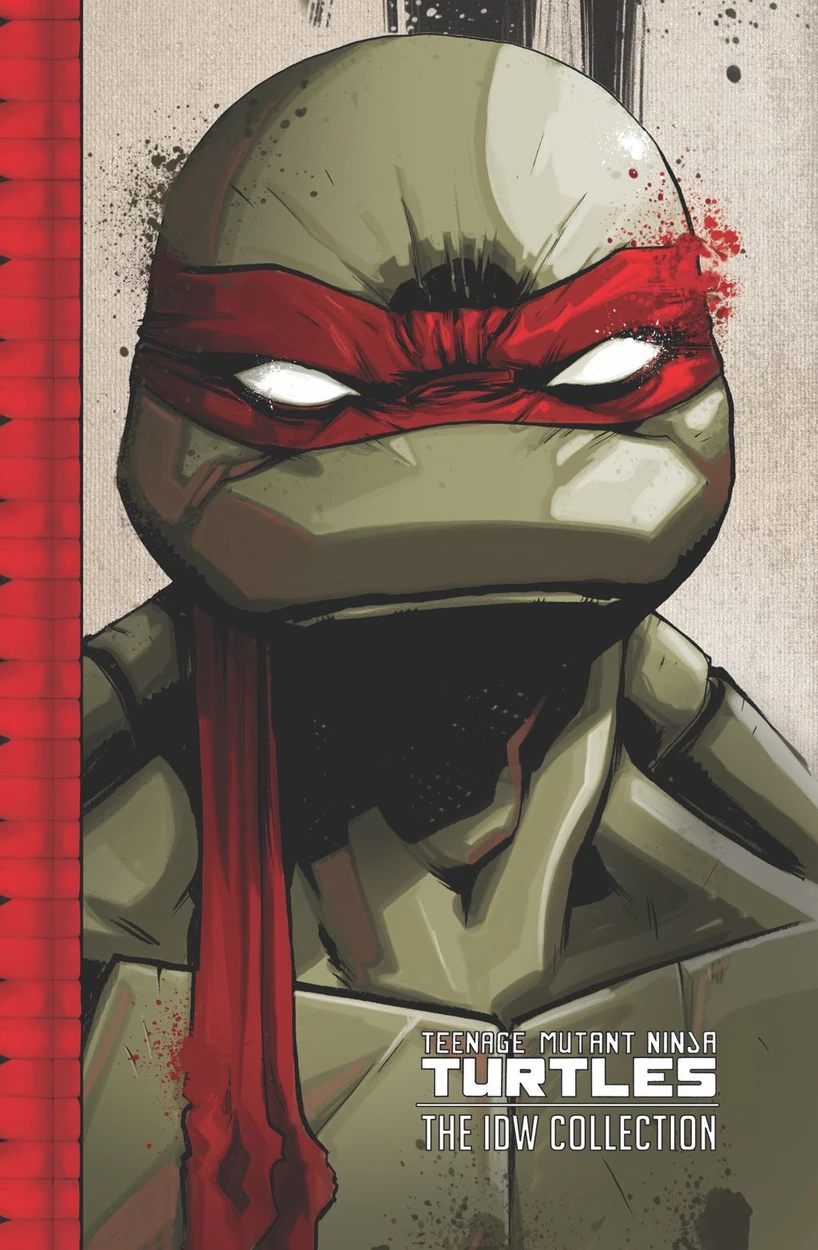
| IDW (2011 onward) | Starts apart from his brothers. The Foot Clan comes between him and Alopex. | The IDW Collection vol. 1. |
| The Last Ronin (2020–2022) | An independent future in which Raph’s retaliation has lasting consequences. | The Last Ronin #2, with spoilers. |
| 1987 cartoon | A wisecracking commentator with a red mask and twin sai. | Enter the Shredder or Raphael Meets His Match. |
| 2003 cartoon | Returns to Mirage’s intensity and the street-level friendship with Casey. | Meet Casey Jones. |
| 2012 cartoon | CG animation, chipped plastron and an unexpected friendship with Spike. | Slash and Destroy. |
| Rise (2018) | The eldest brother, a snapping turtle, a first-time leader and a tonfa fighter. | Mystic Mayhem. |
| 1990 movie | Animatronic suit, trench coat and an ambush that brings him and Leo closer. | Teenage Mutant Ninja Turtles. |
| TMNT (2007) | A motorcycle-riding vigilante whose clashes with Leonardo come to a head. | TMNT. |
| 2014 and 2016 movies | The biggest visual overhaul of the live-action films, with a broad build and improvised gear. | Teenage Mutant Ninja Turtles and Out of the Shadows. |
| Mutant Mayhem and Tales (2023–2025) | A kid who wants a good fight and a chance to live out in the open. | Mutant Mayhem and Raph Thinks It Through. |
Mirage: from Casey Jones to City at War
In Raphael #1, Casey is about to go too far while punishing some criminals. Raph steps in and their fight eventually makes room for friendship. The 1990 movie and the 2003 cartoon both use this setup to bring the vigilantes together. In Return to New York, Raph and Leo argue about returning to the city to face the Foot. Their disagreement is about timing and who gets to decide for the group. City at War follows the power struggle after Shredder’s fall, including competing Foot factions and Karai’s proposed deal with the Turtles.


Archie: Ninjara and the older Raphael with an eye patch
TMNT Adventures started by adapting the cartoon, then told a story of its own. When Raphael meets Ninjara in Japan, she is working with the antagonist Chien Khan. She makes her own choices, joins the group and becomes Raph’s partner. The future stories introduce an older Raphael who wears an eye patch. Moon Eyes puts the relationship between the younger Raph and Ninjara under pressure. The patch and the breakup belong to different points in the same comic continuity. ArcadeBot’s Ninjara guide
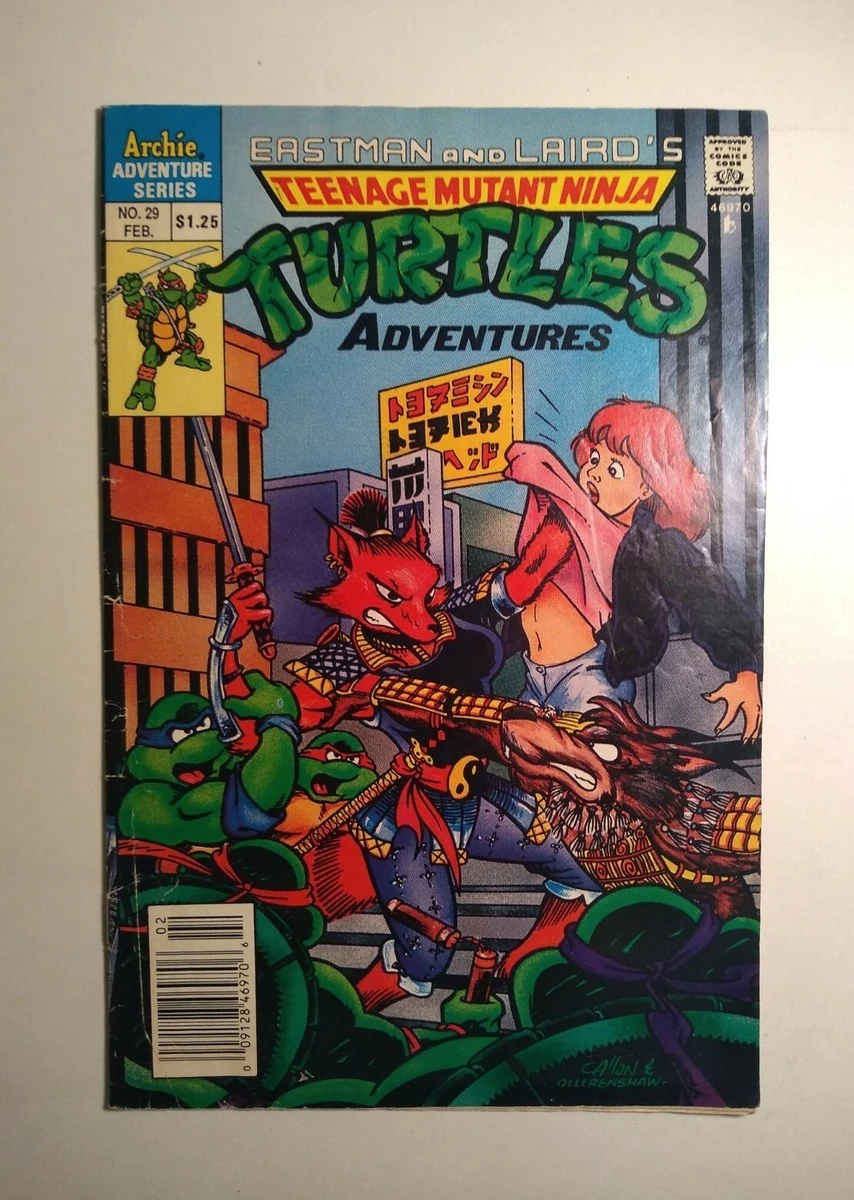
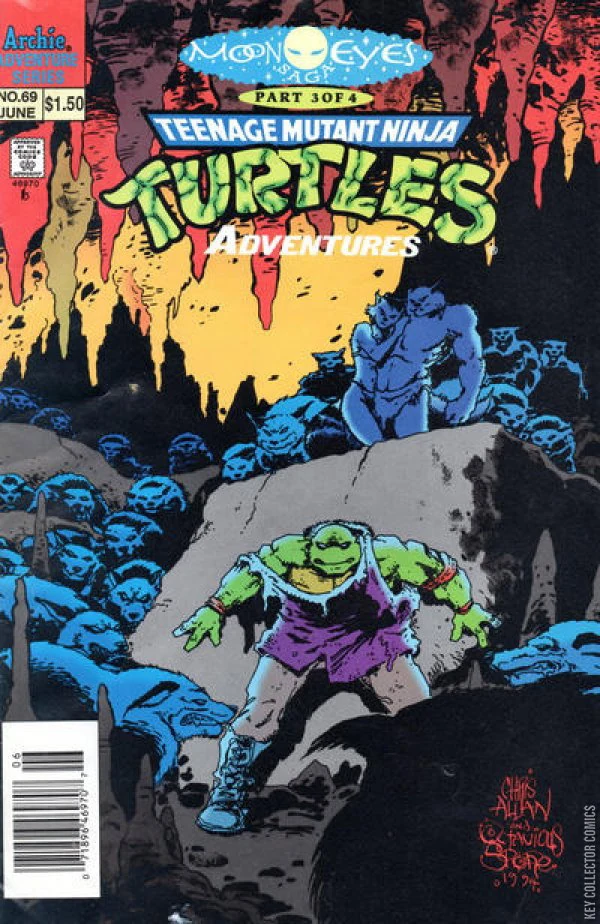
Image: the time Raphael became Shredder
Volume 3, written by Gary Carlson and drawn primarily by Frank Fosco, changes Raph’s silhouette with a facial injury and Shredder’s helmet. He uses the identity to intervene in the struggle for control of the Foot Clan. The Image run ended with issue #23. IDW reprinted it as Urban Legends and added three new issues to close out that branch. The Urban Legends ending, Mirage’s later comics and IDW’s modern ongoing series should be read separately.

IDW: from the streets to the Foot Clan and a prison cell
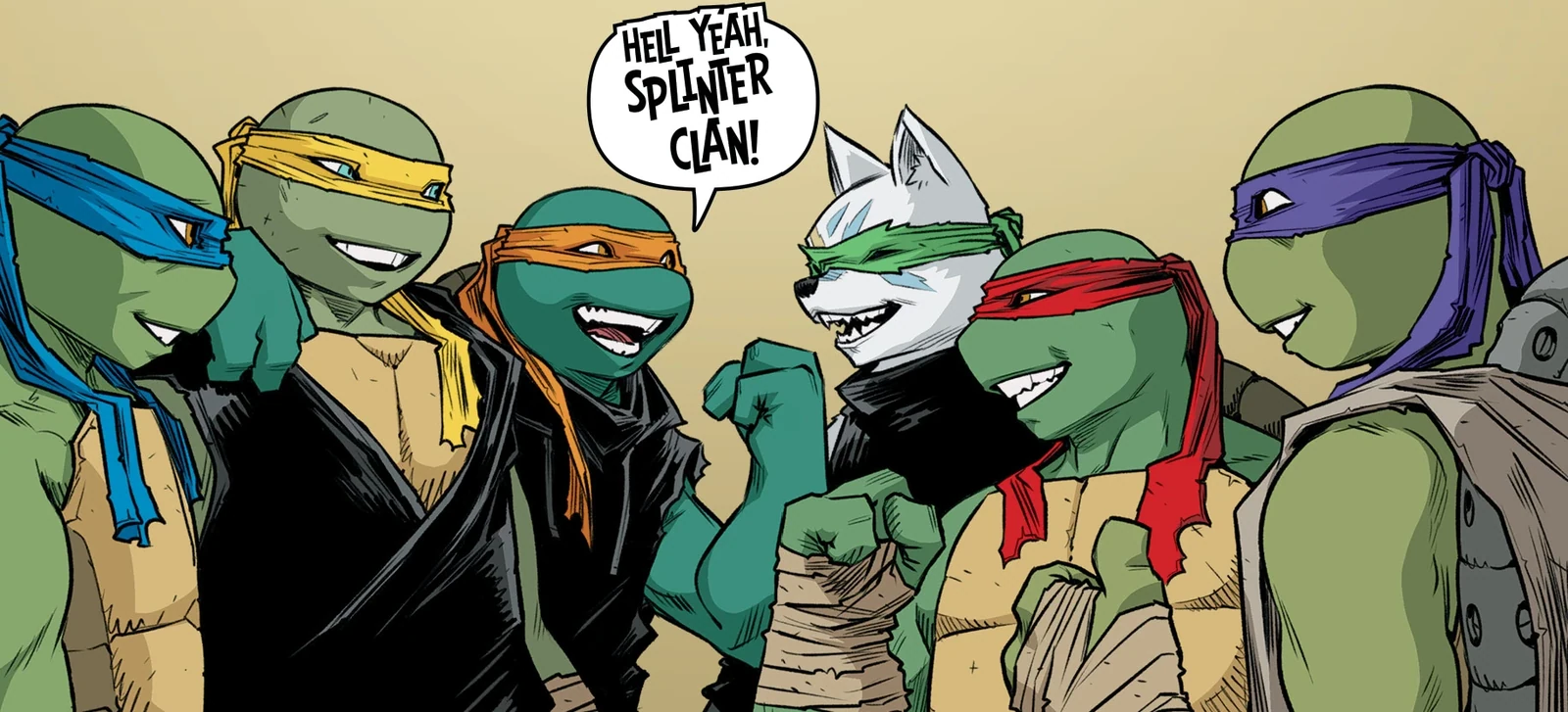
The 2011 Raphael spends the early story away from the brothers he will eventually find. Casey offers him a connection to human life on the street. Alopex, a mutant fox who originally fights for Shredder, earns his trust gradually and becomes his partner. During the Mutant Town era, the Turtles’ choices about working with the Foot put pressure on that relationship. The family also expands with Jennika, a former Foot member who becomes a mutant turtle after receiving a blood transfusion from Leonardo.
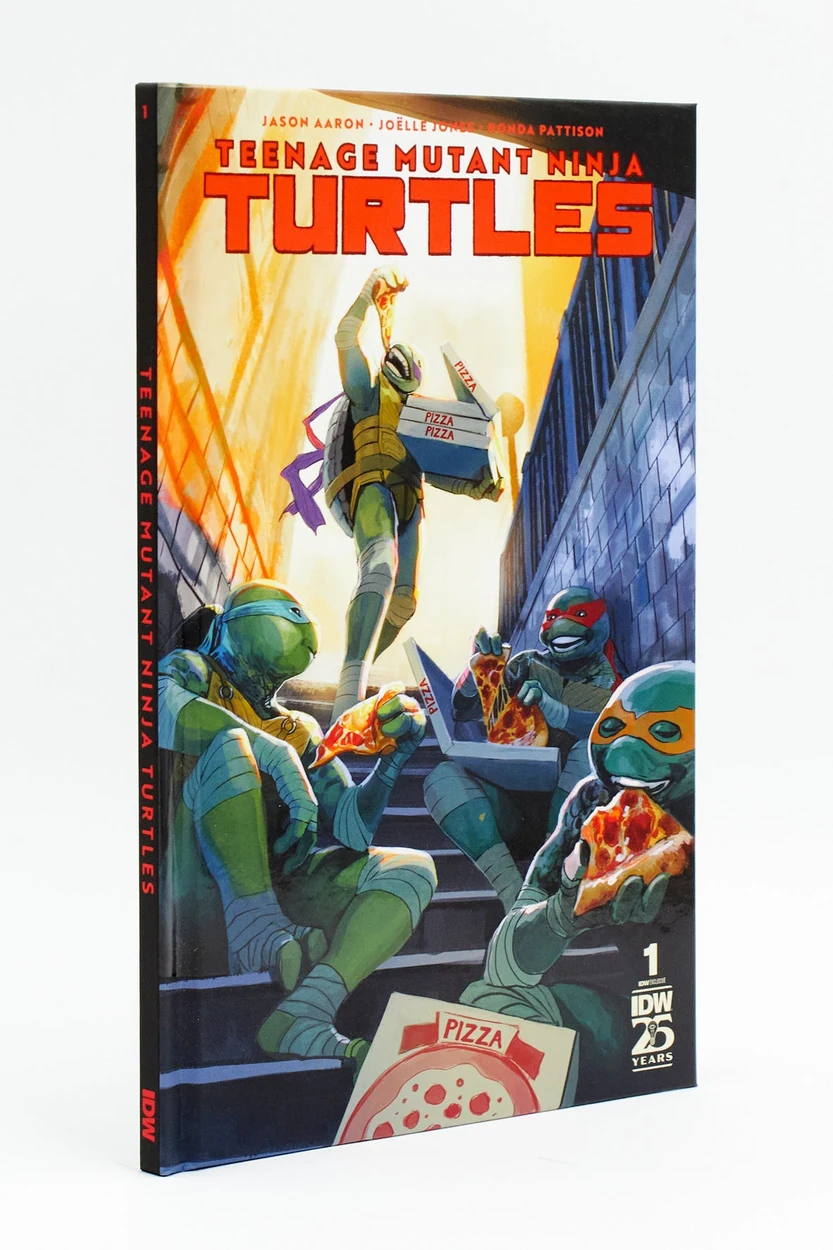
The 2024 relaunch continues this continuity. Jason Aaron and Joëlle Jones open with Raphael in prison while his brothers are off living separate lives. Return to New York collects the first six issues. In 2026, the series reached legacy issue #300, which featured Frank Miller’s first cover for a TMNT comic. War All the Time was announced for January 2027 and falls after the events covered here.
ArcadeBot’s IDW reading order · Return to New York from IDW · The #300 announcement
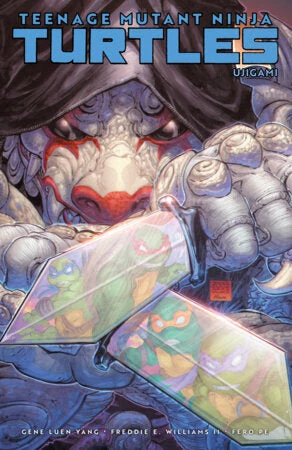
Gene Luen Yang and Freddie E. Williams II took over with #13. In Ujigami, Splinter’s return leaves Raphael and his brothers facing a masked killer and the prospect of losing their father again. The legacy #300 special is #20 of the current series. It leads into The City That Never Dies. As of November 9, the run had reached #23, which splits up the Turtles to contain an undead invasion of New York. The finale, #24, was scheduled for November 11. Ujigami from Penguin Random House · Issue dates and summaries
The Last Ronin and other alternate worlds
The Last Ronin takes the family into a future where one surviving Turtle returns to New York. Raphael’s part of the story is told in flashbacks, especially in the second issue. Lost Years fills in the survivor’s past and Re-Evolution turns to a new generation. The spoiler section explains what happens to Raph. The Last Ronin boxed set from IDW
Saturday Morning Adventures carries the tone of the 1987 cartoon into the comics. Batman/Teenage Mutant Ninja Turtles takes versions of the brothers to Gotham, where the loner who works outside the usual rules fits in naturally. The Power Rangers crossovers and anniversary anthologies have their own versions of the character. Their events belong to those books.

1987: the Ninja Turtle who laughs at the plot
The Fred Wolf Films cartoon gives Raph a dry sense of humor. Rob Paulsen’s performance can land a joke while the team is still running away from the Technodrome. In Raphael Meets His Match, Raph encounters Mona Lisa, a young woman who was turned into a mutant lizard after an encounter with a pirate. They click quickly, although the show rarely returns to the connection. The asides to the audience and the jokes about the adventure itself set this version apart from his more brooding comic counterpart.
2003: back to the street fights of Mirage
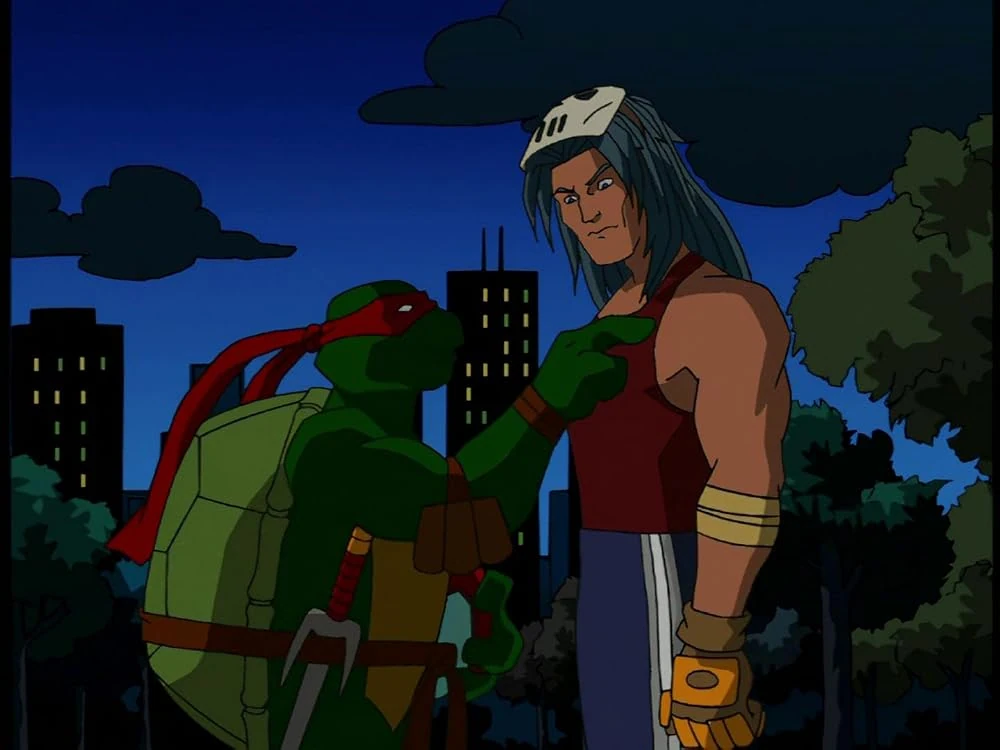
The 4Kids and Mirage series gives him a more severe expression and brings back his friendship with Casey. Meet Casey Jones follows the idea behind the 1985 one-shot. Raph reacts quickly to danger and argues with Leonardo, while his interest in motorcycles and his friendship with Casey reveal what happens when he spends time with someone just as stubborn. In Turtles Forever, the 2003 team meets versions from 1987 and Mirage. Even the way those Raphaels argue reflects the tone of their own worlds.
2012: Spike, Slash and Mona Lisa
Nickelodeon’s CG model has a compact build, a chipped plastron and a scowl you can recognize without the red mask. The series has him argue with Leonardo, care for his pet turtle Spike and learn to ask for help. In Slash and Destroy, Spike mutates and becomes Slash. He asks Raph to form a team of their own and attacks his brothers. Raph has to choose between a companion he finds easy to trust and a family that regularly drives him up the wall.
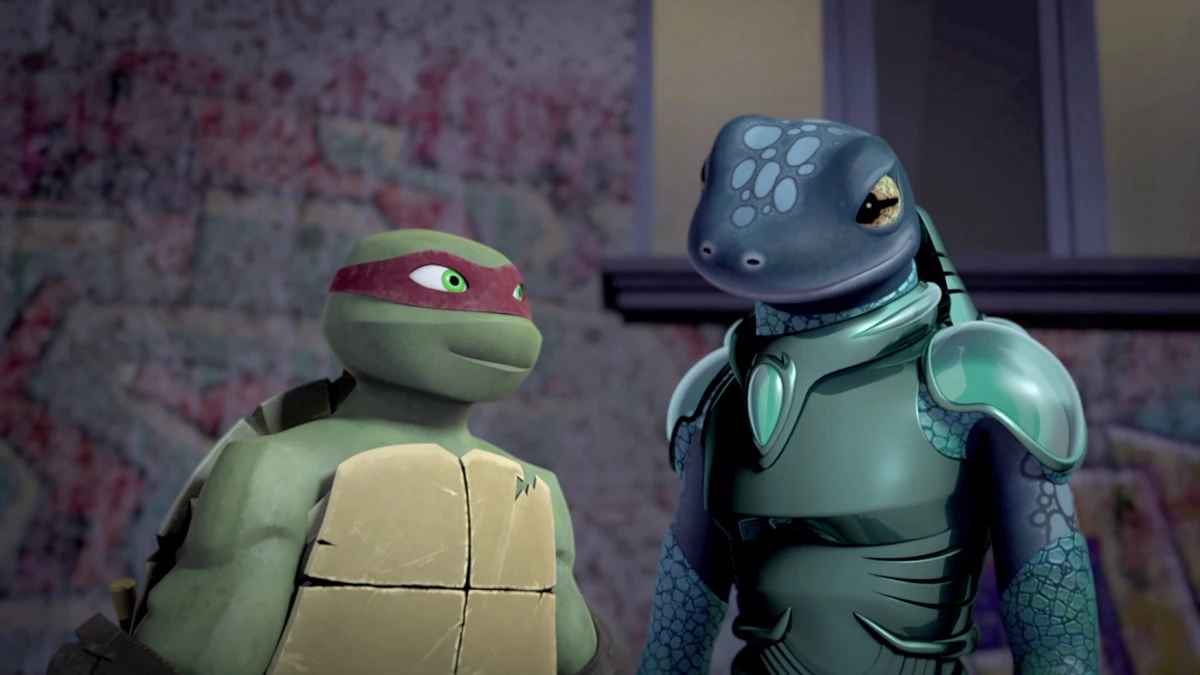
During the space arc, he meets a Salamandrian warrior named Y’Gythgba, whom he calls Mona Lisa. Their relationship develops from confrontation to mutual respect and romance. This is a different character from the 1987 Mona Lisa. Mutant Apocalypse also shows a desert future in which an older Raph travels with Donatello, whose mind resides in Metalhead. That story has its own setting and does not describe the show’s ordinary present.
Rise (2018): the leader who has to let go
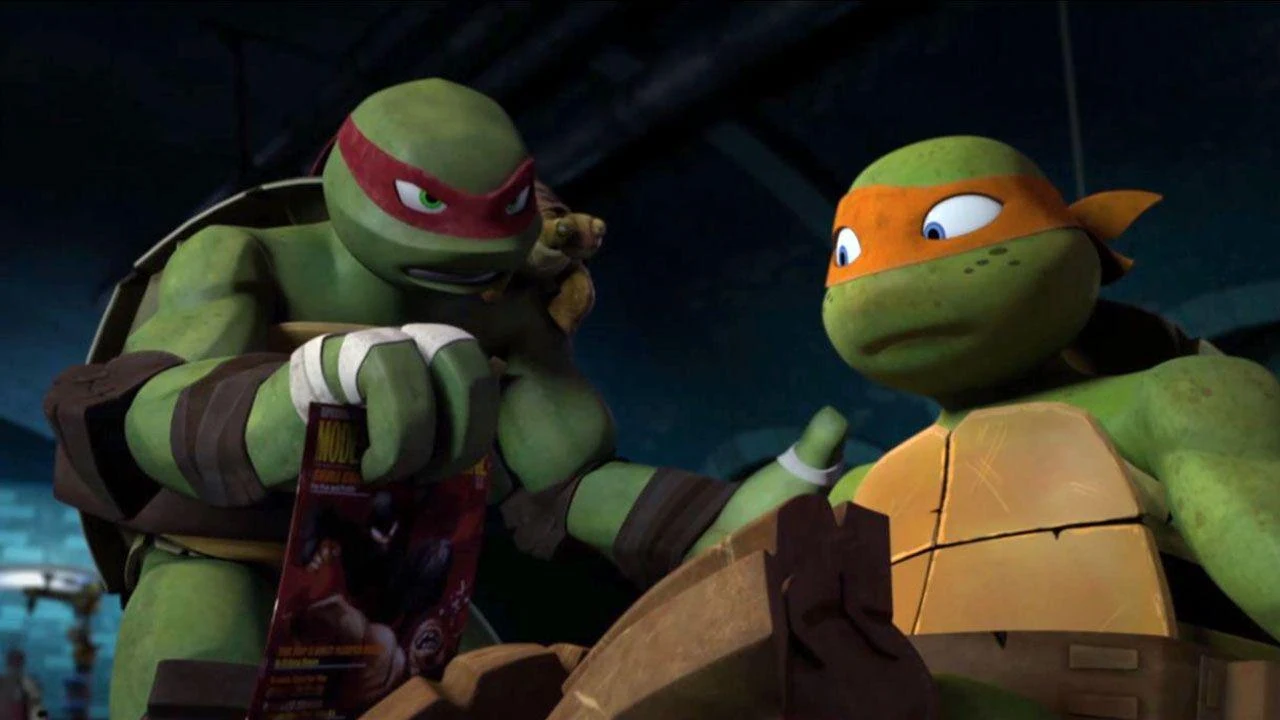
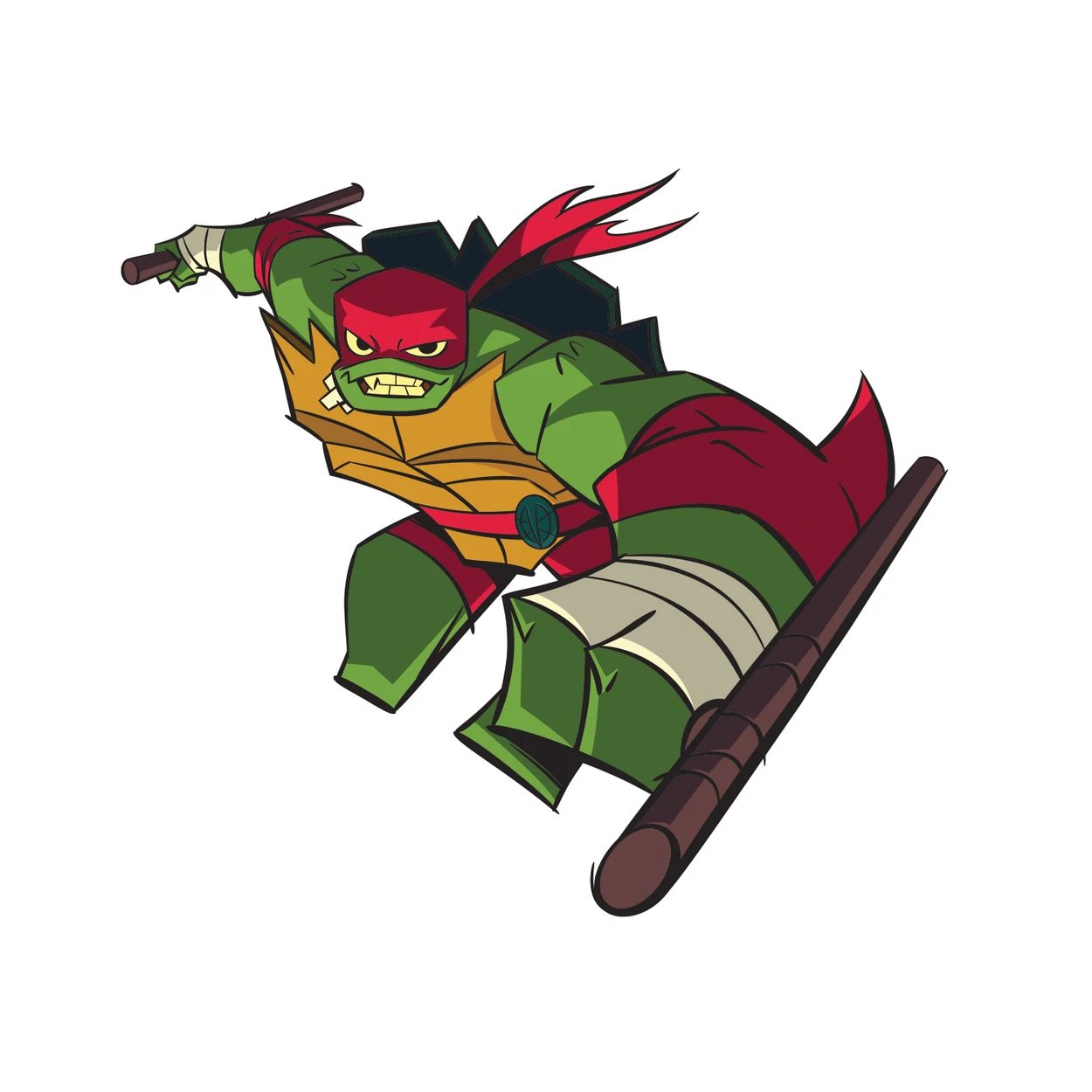
Baron Draxum plays a part in the turtles’ mutation. Splinter rescues and raises them. Raph is a snapping turtle, the oldest and largest brother, with a jagged shell. He starts out with tonfa and leads the team. His mystical power extends his attacks and helps him shield others. The show makes his protectiveness a leadership problem: the more he tries to do himself, the less room his brothers have to solve things on their own.
At the end of the series, Splinter names Leonardo the new leader. The 2022 Netflix movie continues that transition. Raph puts himself in harm’s way to save Leo from the Krang and spends part of the story under their control. Omar Benson Miller voices him in both the series and the movie. Netflix’s Rise cast guide
The live-action trilogy of 1990, 1991 and 1993
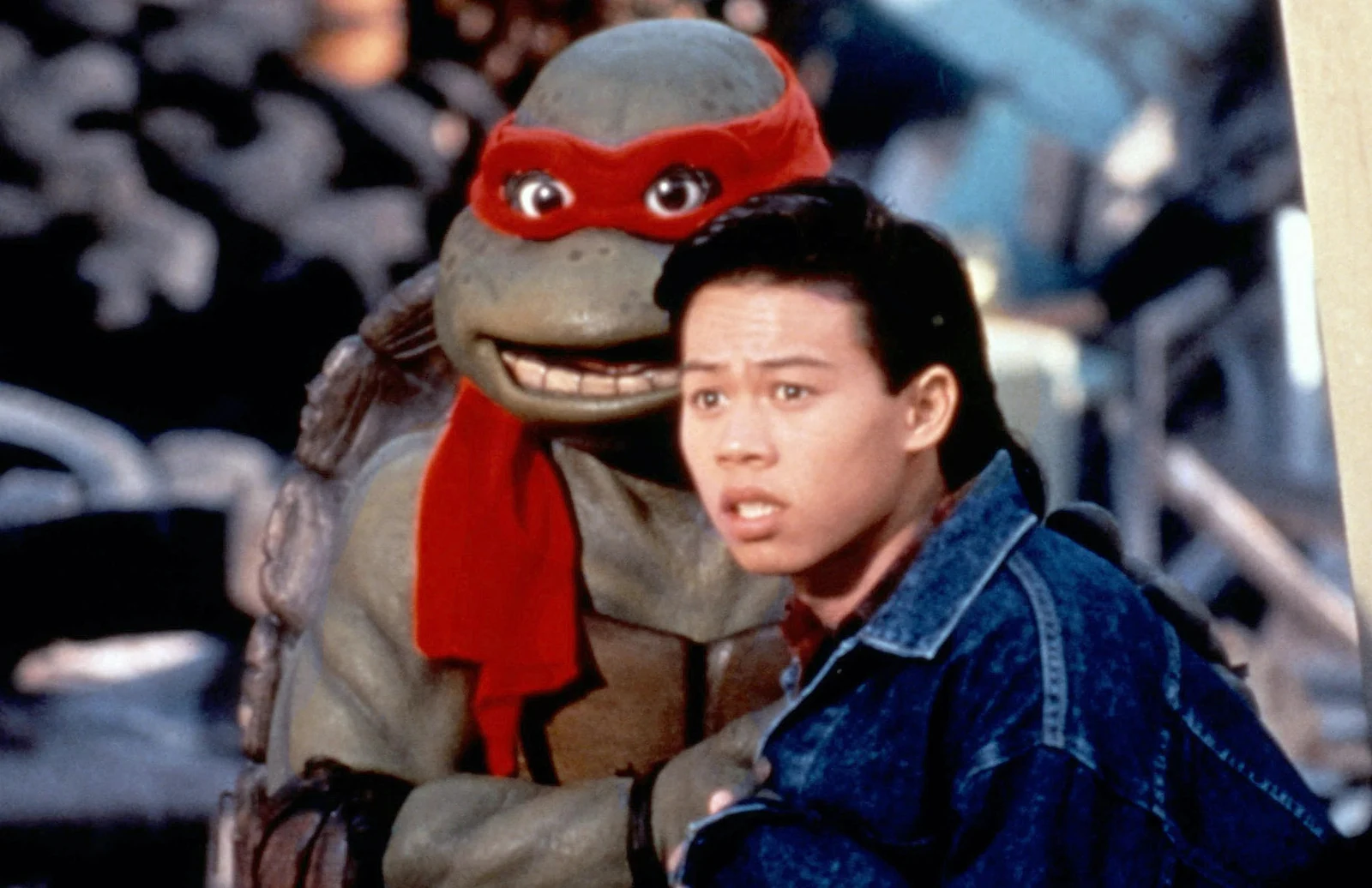
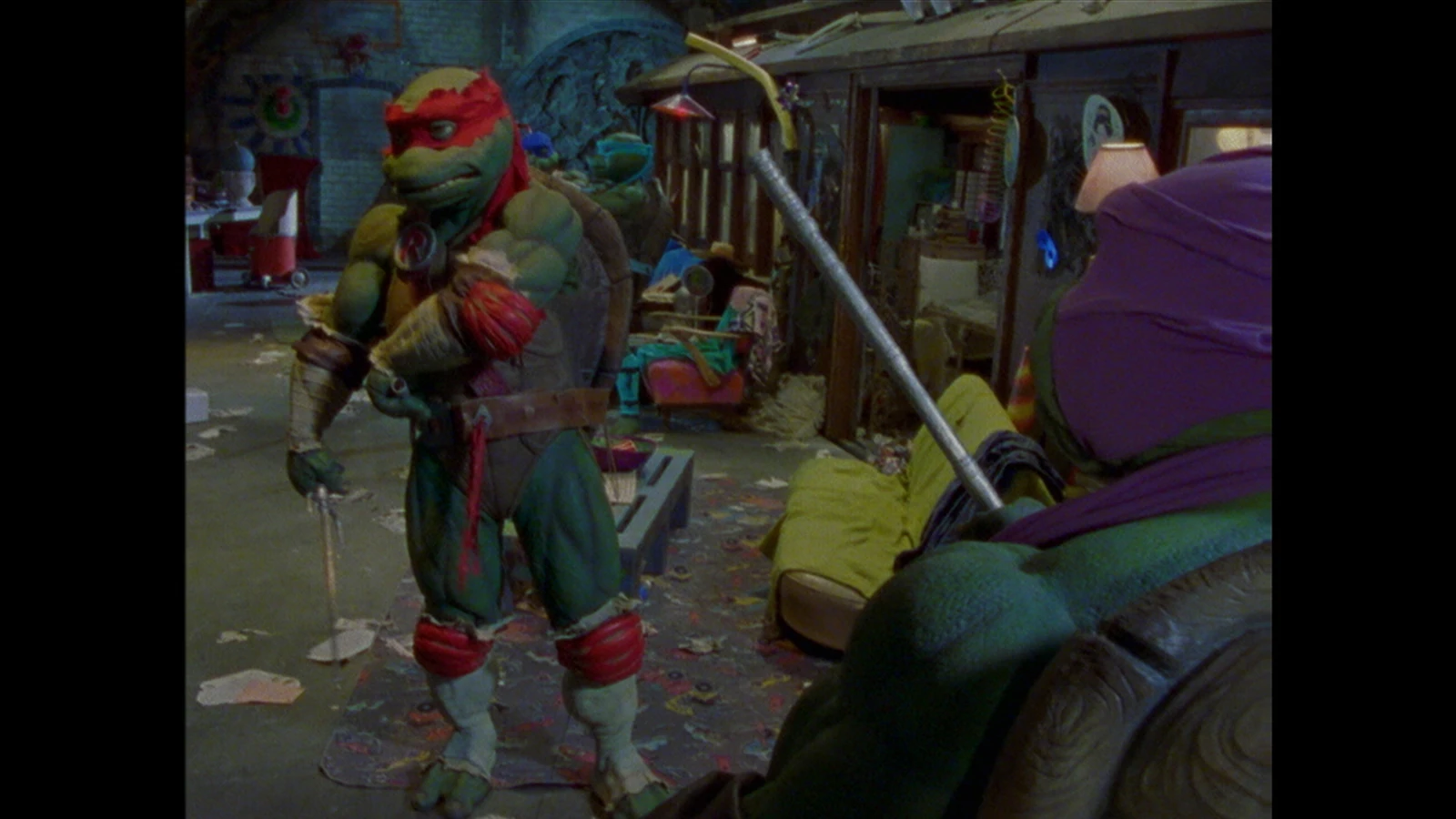
The 1990 film adapts parts of Mirage, including the friendship with Casey and the retreat to the farm. It changes which brother the Foot ambushes. In the comic it is Leonardo. The movie has Raphael take the beating, placing his relationship with Leo at the center of his recovery. A trench coat and hat become his disguise. Jim Henson’s Creature Shop suits and animatronic heads bring physical performances and facial puppetry together. Josh Pais also appears as a taxi passenger.
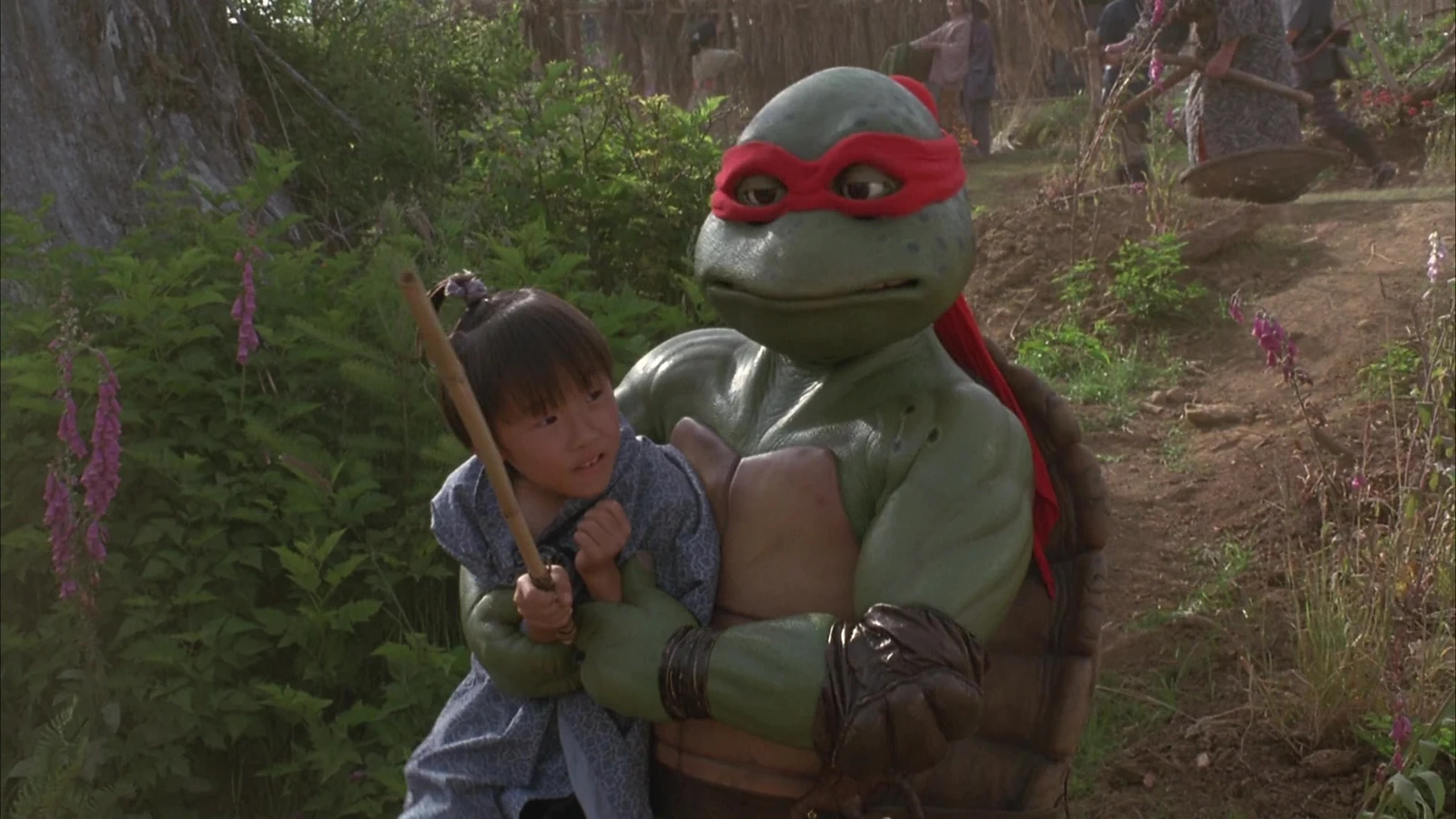
In The Secret of the Ooze (1991), Raph goes off on his own again and teams up with Keno. Tokka and Rahzar show what happens when Shredder uses the mutagen to make his own soldiers. In the 1993 film, a trip to feudal Japan puts Raph in a position to rescue a boy named Yoshi. Their scenes allow him to show care away from the arguments that defined his first movie. ArcadeBot’s 1990 movie guide

TMNT (2007): the Nightwatcher’s double life
Kevin Munroe’s animated film begins with the family scattered. While Leonardo trains abroad, Raphael patrols on a motorcycle wearing a helmet and armor. Casey learns who is behind the mask and becomes his confidant. On the rooftop, Raph’s sai meet Leo’s swords in a fight about the strain of living as brothers and working as a team. The film can follow the live-action trilogy, and the reunion works on its own terms for viewers who missed those films.

The 2014 and 2016 movies
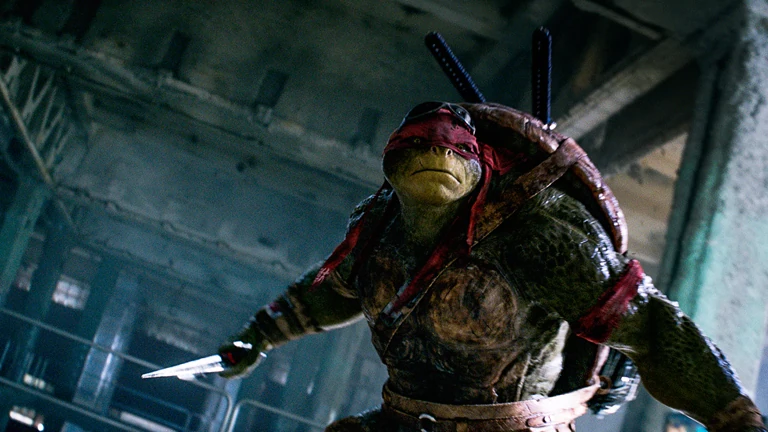
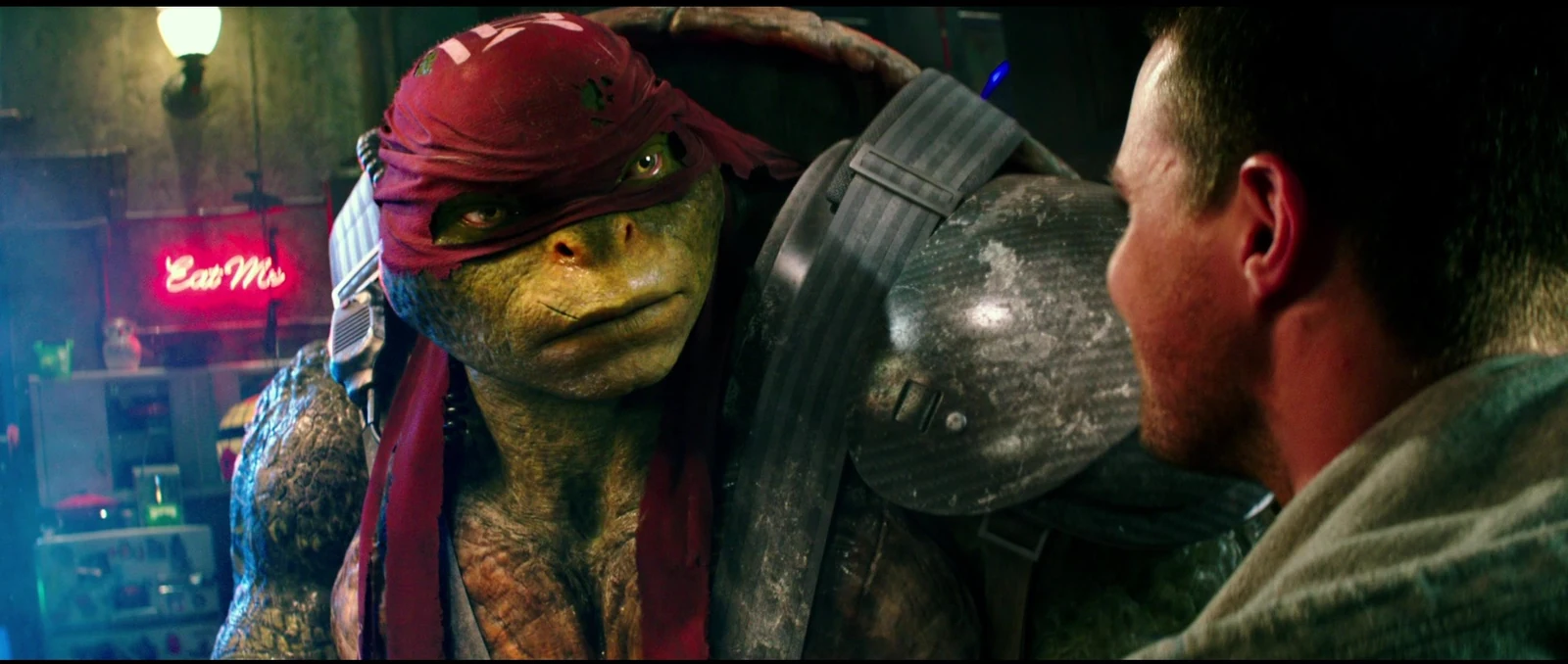
The 2014 Paramount reboot connects the turtles and Splinter to lab experiments. April saves them when they are young. Raphael is broad and muscular, with a bandana that covers more of his head, wrappings and improvised gear. When the whole group is in danger, the brother who talks about leaving ends up explaining how much they mean to him. In Out of the Shadows (2016), the possibility of looking human starts a new argument. Raph and Mikey see a chance to walk around in public, after Leonardo has tried to keep the option from the group. Alan Ritchson plays Raphael in both films. RTVE’s Raphael feature
Mutant Mayhem (2023) and Tales (2024–2025)
Mutant Mayhem draws Raphael with angular proportions, a broad red mask and the eagerness of a teenager itching for a fight. Brady Noon gives the part a teenage voice. Going to school matters as much to the four brothers as defeating Superfly. Raph wants to belong in the world Splinter taught him to fear, and he begins to find a place in it without losing his appetite for action.
Tales continues that world in 2D. Raph Thinks It Through puts the team’s fighter in a situation where he has to pause and work things out. The second season debuted in December 2025. In Mutantweight Title Bout and Raph Fights Everyone, his love of a good fight takes him into an arena where the Purple Dragons hope to profit from mutants. The theatrical Mutant Mayhem sequel moved to 2027. Paramount’s Tales press notes · Tales press archive

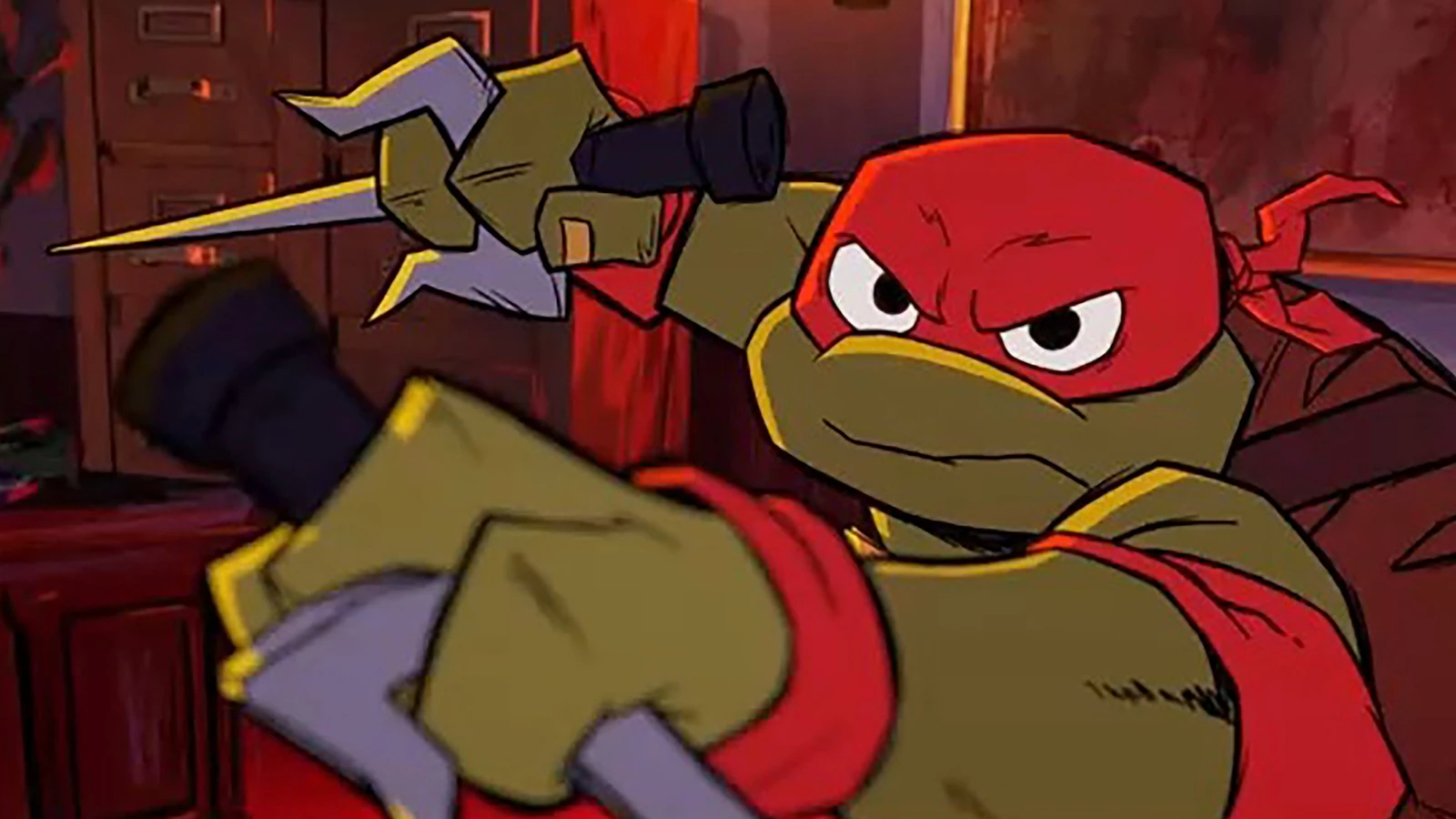
Chrome Alone 2: Lost in New Jersey (2025), a short from the Mutant Mayhem team, sends Raph and his brothers to investigate a toy line using their likenesses. It is a separate adventure from the theatrical sequel announced for 2027. The short from Mikros Animation
The Next Mutation and the animated crossovers
Ninja Turtles: The Next Mutation (1997–1998) adds Venus de Milo to the live-action team and pits the group against the Dragon Lord. Raph keeps the red and his direct approach, with Matt Hill providing the English voice. The cast crossed into Power Rangers in Space in Shell Shocked. Beyond Turtles Forever, try Trans-Dimensional Turtles, which brings the 1987 and 2012 casts together, and Batman vs. Teenage Mutant Ninja Turtles (2019), an animated crossover with its own take on the comic-book premise.
Raphael’s relationships with Leonardo, Donatello, Michelangelo and Splinter
Leonardo. Raphael judges leadership by who is willing to put themselves in harm’s way. Leonardo often thinks first about what a decision will do to the team. Return to New York and TMNT (2007) dramatize that difference. The reconciliation in the 1990 movie and Raph’s rescue of Leo in Rise show how much trust can coexist with an argument.
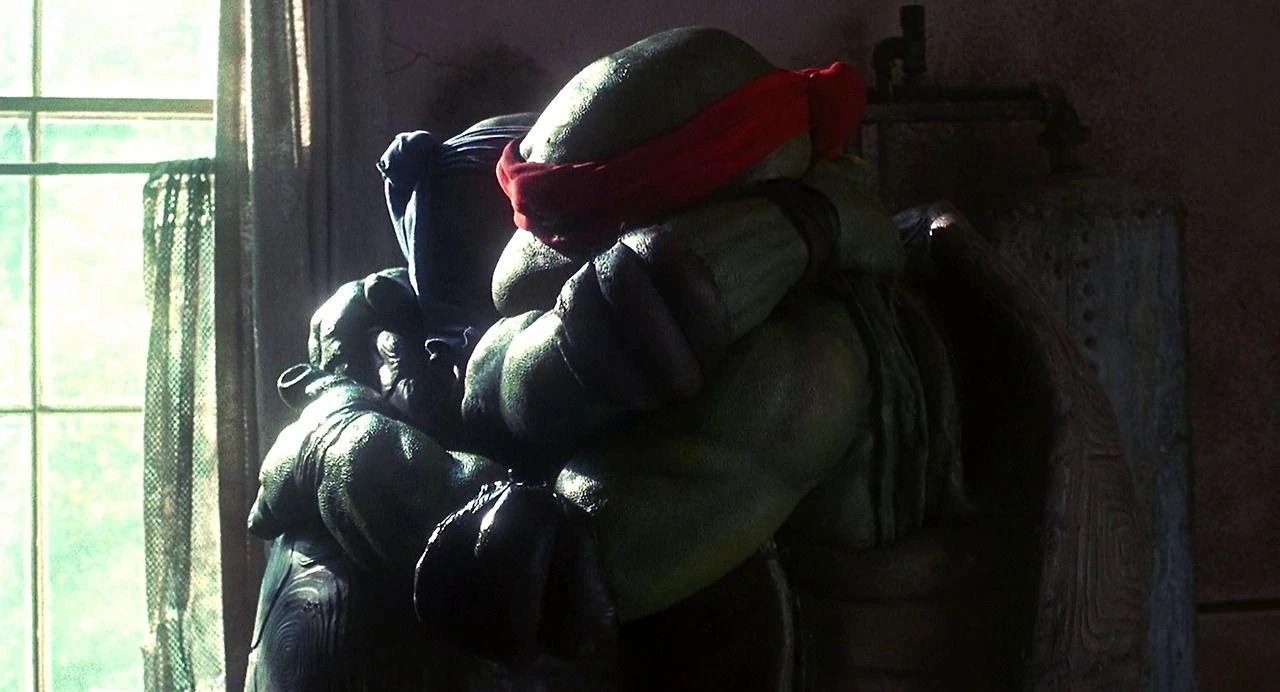
Donatello. Donnie often offers solutions that require more patience than Raph would like. The future of Mutant Apocalypse keeps them on the same side. Raphael relies on Donatello as they travel, even though their bodies and their world have changed. The trust survives in a story with no workshop or lair to fall back on.
Michelangelo. The brothers share jokes and a desire to act right away. Their sparring session in Mirage shows that Raph can intimidate even the most easygoing Turtle. In Out of the Shadows they are both curious about living as humans. In The Last Ronin, Michelangelo has a different reason to look back on the time they spent together.
Splinter. Father and teacher are two roles that sometimes pull against each other. Raphael challenges orders and still wants his father’s approval. In TMNT (2007), he admits his part in what happened to Leonardo. Rise shows what happens when Raph takes the lead first and then has to make room for another brother.
Casey Jones, April O’Neil and Raphael’s love interests
Casey Jones. Raph’s best-known friendship starts in his Mirage one-shot and returns in the 1990 film and 2003 cartoon. Both characters are vigilantes who dislike being told to wait. Raph has to stop Casey from going too far, which matters to their friendship as much as the shared taste for a fight. IDW adds another side to it: Casey gives Raph someone to turn to while he is still separated from his family.
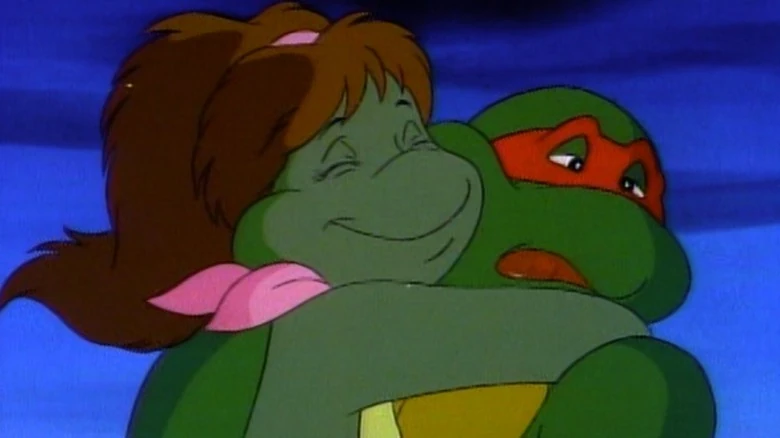
April O’Neil. In 1990, Raph comes to her aid and she opens her home to the Turtles. In 2014, April knows them before the mutation. In Mutant Mayhem, she is a teenager investigating Superfly and helps the brothers get a chance at public acceptance. She makes choices that shape Raphael’s life in each version.
Ninjara, Mona Lisa and Alopex. Ninjara, also known as Umeko, belongs to Archie. The lizard mutant of 1987 shares an adventure with Raphael, while Y’Gythgba is the 2012 Raphael’s partner. Alopex comes from IDW, and her relationship with Raph passes through distrust of the Foot Clan. Each of the three characters has reasons of her own to question what Raphael wants. Ninjara · Mona Lisa
Other allies. Karai offers the Turtles a deal in Mirage’s City at War. It is a bargain shaped by what the Foot needs. In the 2012 series, Slash goes from attacking Raph’s brothers to leading the Mighty Mutanimals as an ally. Chompy Picasso, the baby alien turtle Raph adopts, gets the kind of patience he rarely gives an adult.
Shredder, the Foot Clan and Raphael’s personal rivals
Shredder and the Foot Clan go after the entire family. In the first Mirage issue the conflict begins with Hamato Yoshi’s death. The 1990 rooftop ambush makes the damage personal for Raph. Karai’s role also depends on the story. She can strike a deal with the Turtles in Mirage, have a family history of her own in 2012 or set off the retaliation seen in The Last Ronin.
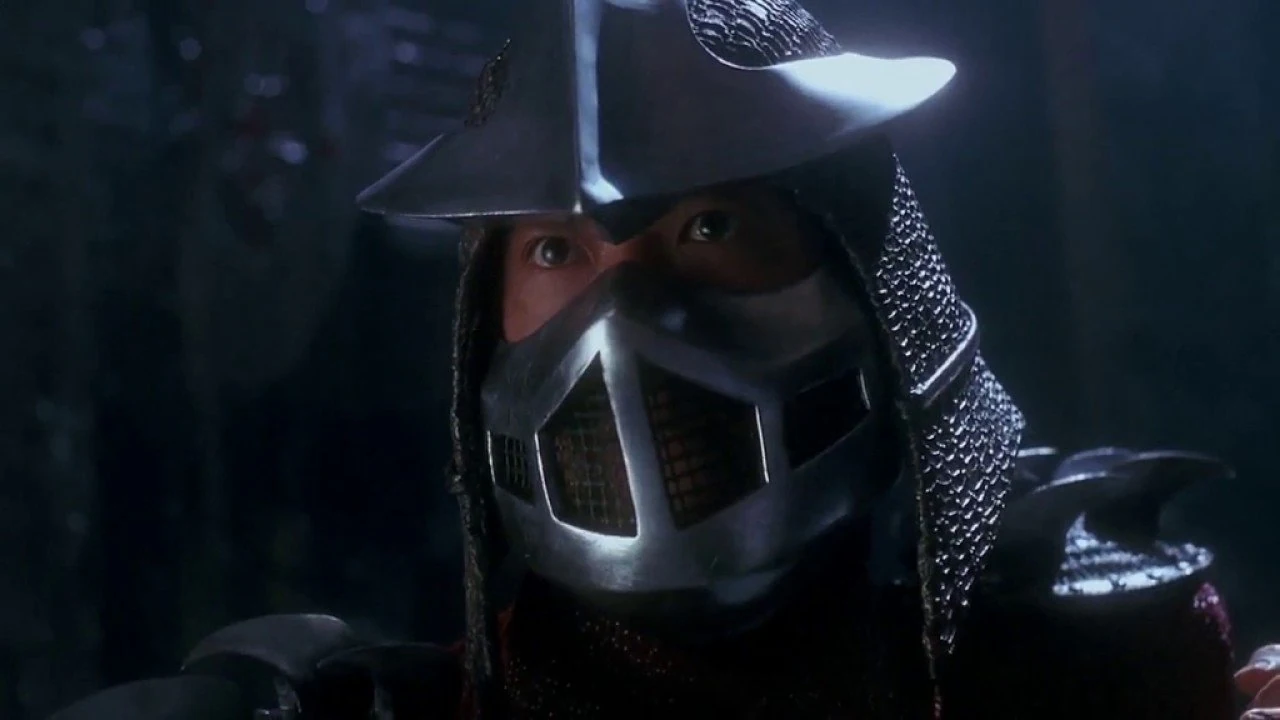
Slash is a personal rival in 2012 because he used to be Spike. Hun threatens Casey and the Turtles in 2003, tying Raph’s interest in the Purple Dragons to his friendship. Agent Bishop sees mutants as research subjects in the 2003 series and threatens the whole family. Tales uses a different version of Bishop, whose technology challenges Raphael’s tendency to fight his way out. Old Hob is tied to IDW’s origin story: the encounter during the StockGen escape helps separate Raph from the other Turtles. ArcadeBot’s Old Hob guide
Key moments in Raphael’s history
| Year and story | What changes for Raph |
|---|---|
| 1985 · Raphael #1 | He meets Casey and has to restrain someone with a lot in common with him. |
| 1990 · Teenage Mutant Ninja Turtles | The Foot ambush leaves him in his brothers’ care and gives Leo a chance to reconcile with him. |
| 2007 · TMNT | The Nightwatcher takes his need for independence far enough to fight his own brother. |
| 2013 · Slash and Destroy | Spike mutates, becomes Slash and attacks Raph’s brothers. |
| 2020 · Rise series finale | Leonardo takes on the leadership role Raph held at the start. |
| 2024 · Teenage Mutant Ninja Turtles #1 at IDW | Return to New York begins with Raph in prison and the family scattered. |
Spoilers for The Last Ronin #2
After an attack leaves Splinter badly injured, Raphael goes out on his own for revenge. He confronts Karai and her fighters at the docks. Both fall into the water. Karai mortally wounds Raphael and survives the fight. Michelangelo is the survivor who becomes the Last Ronin. The death is told in a flashback and belongs to this miniseries’ future timeline.
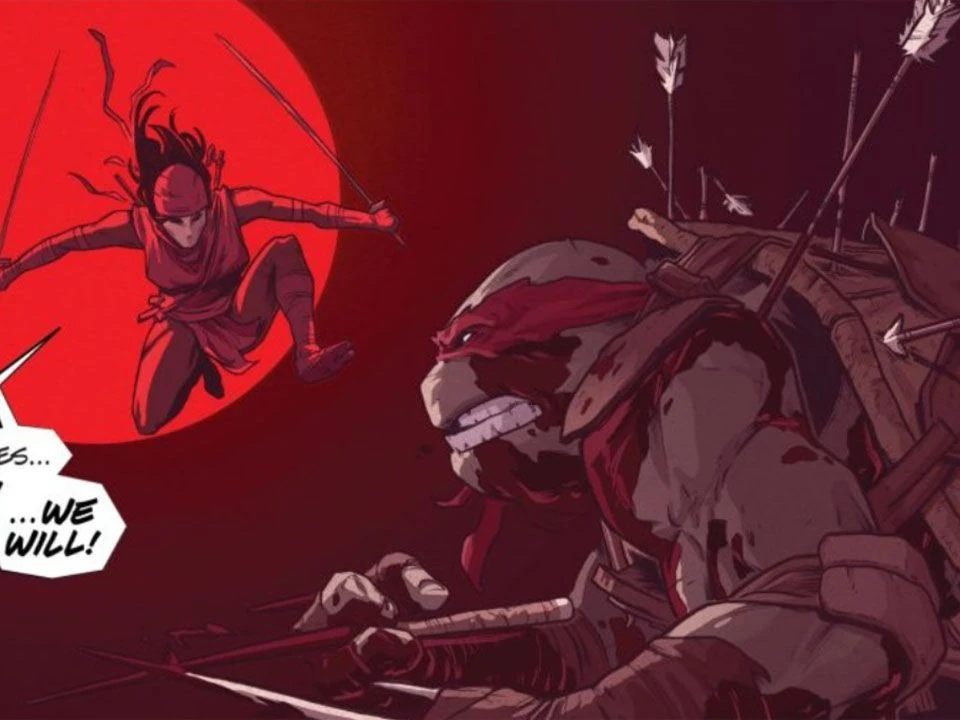
How Raphael plays in TMNT video games
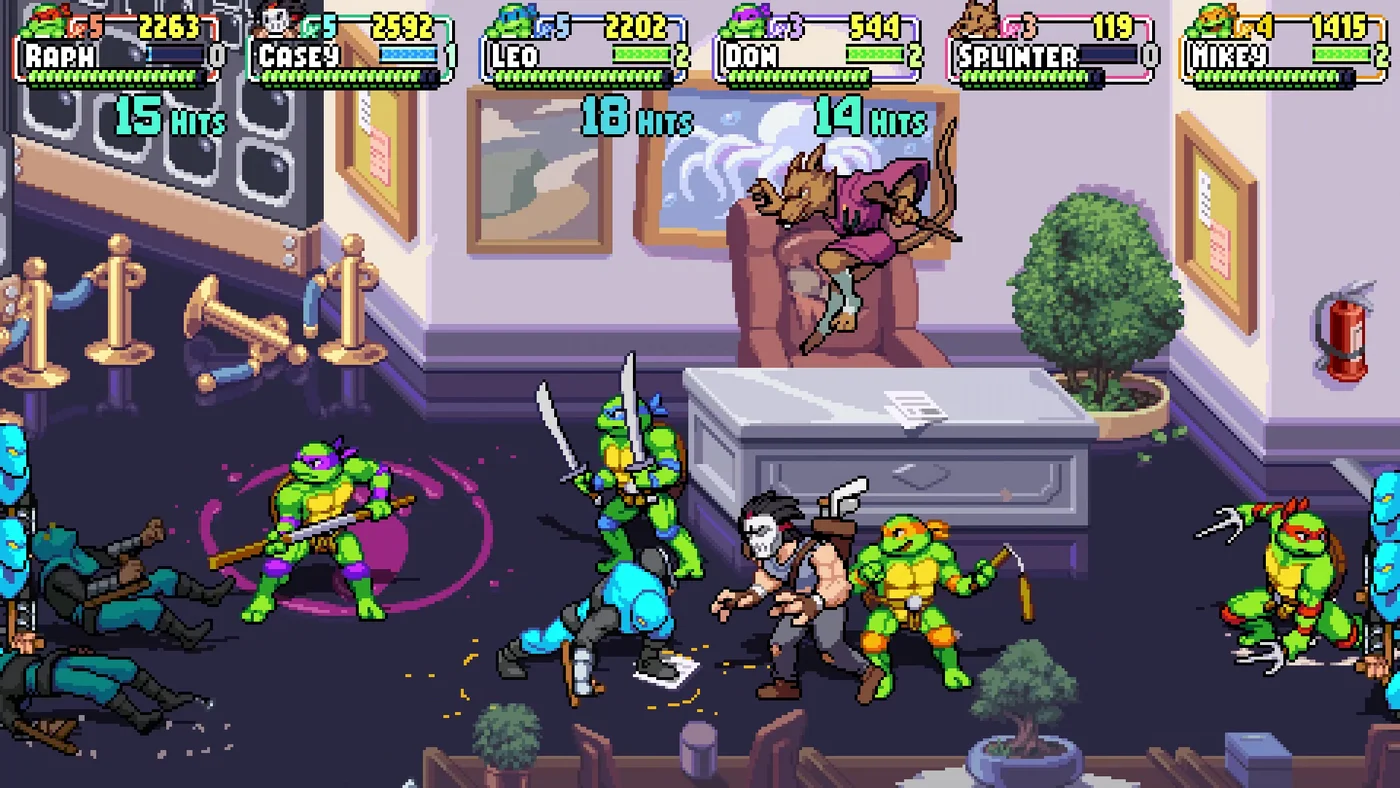
Raphael carries the same twin sai in the NES and arcade games, but the two versions play differently. On NES, switching turtles changes how far you can reach. Donatello makes it easier to hit from a distance, while Raphael has to get in close. Turtles in Time makes positioning matter through quick attacks, dashes and throws. The edition matters for fighting games as well: the SNES, Genesis and NES versions of Tournament Fighters have different rosters and systems.
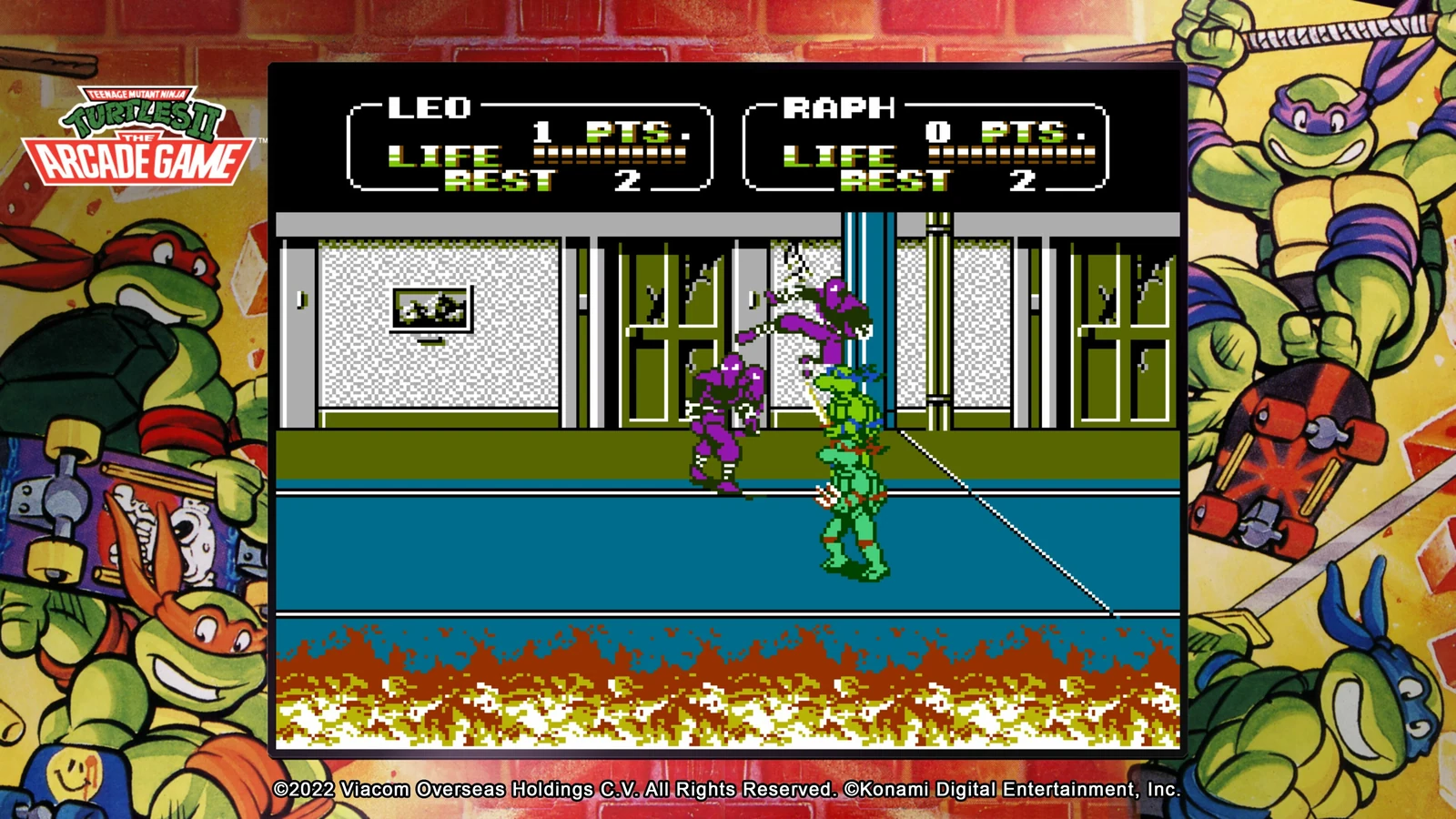
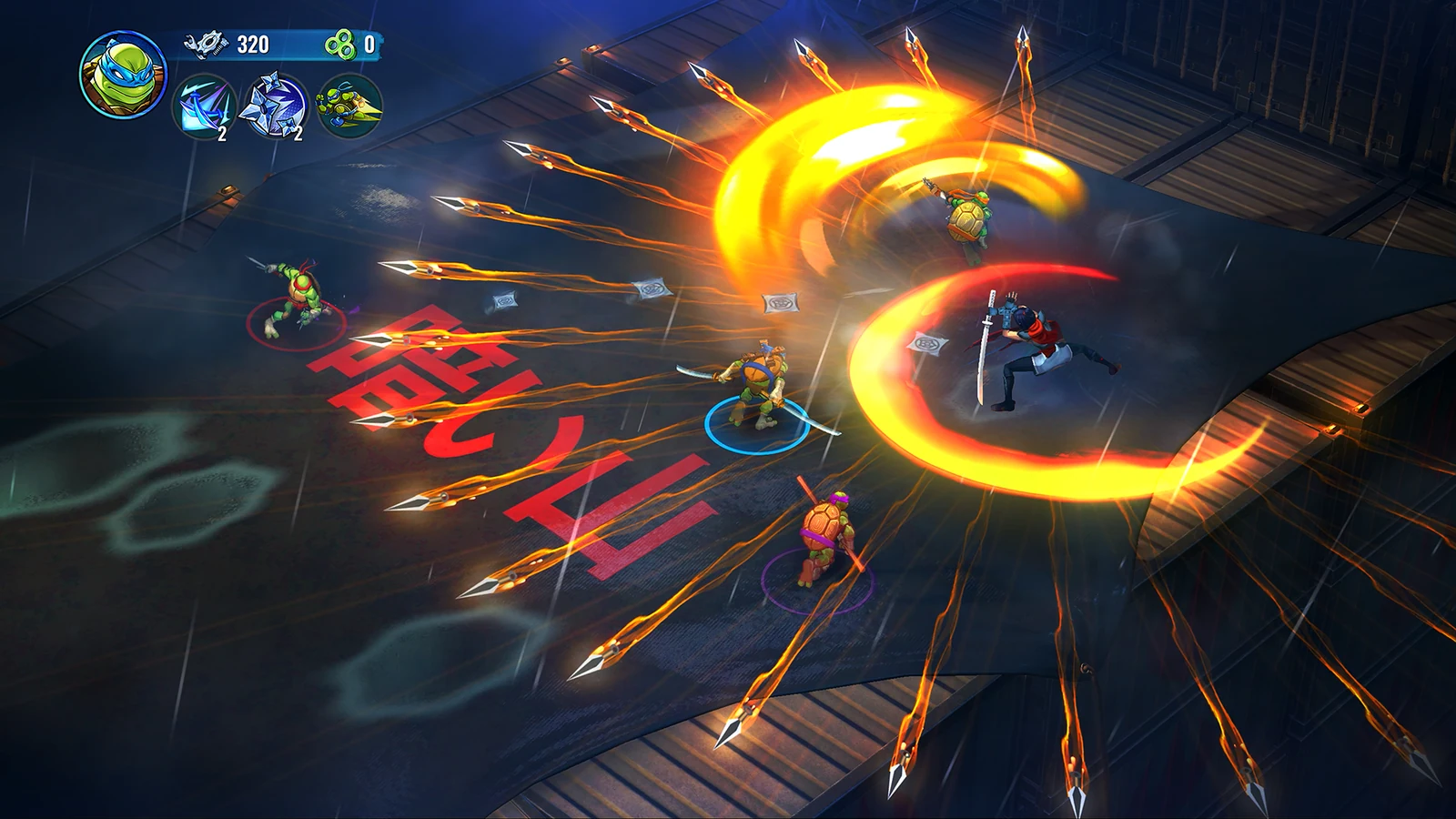
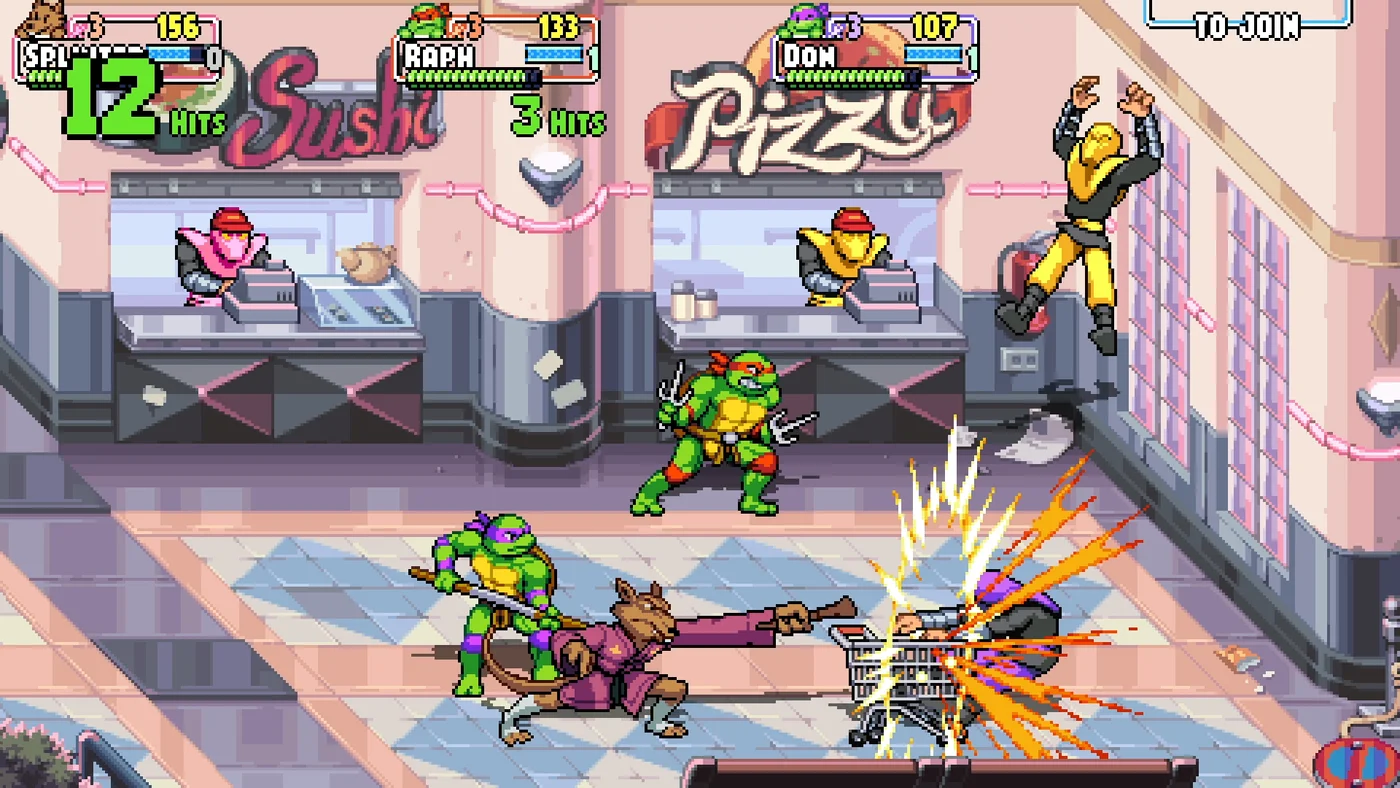
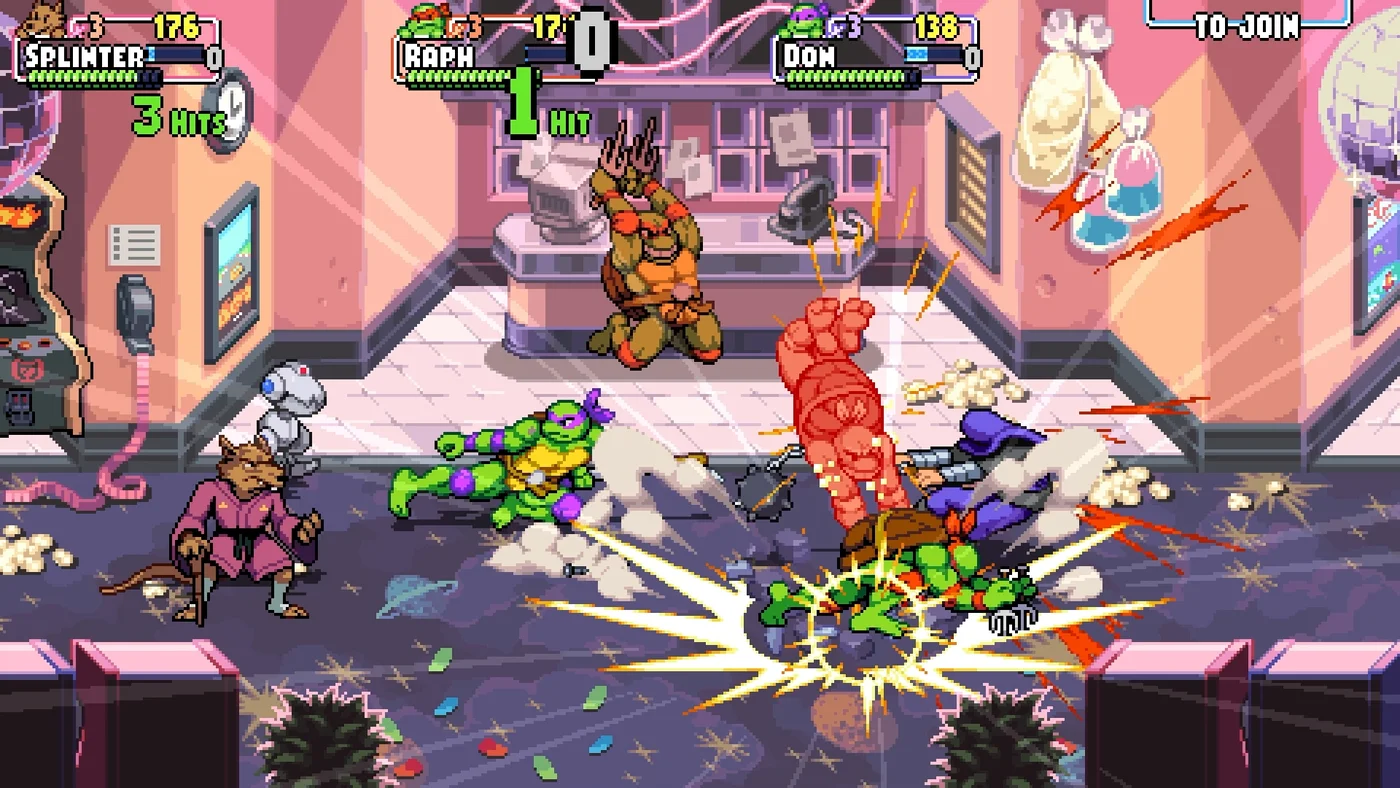
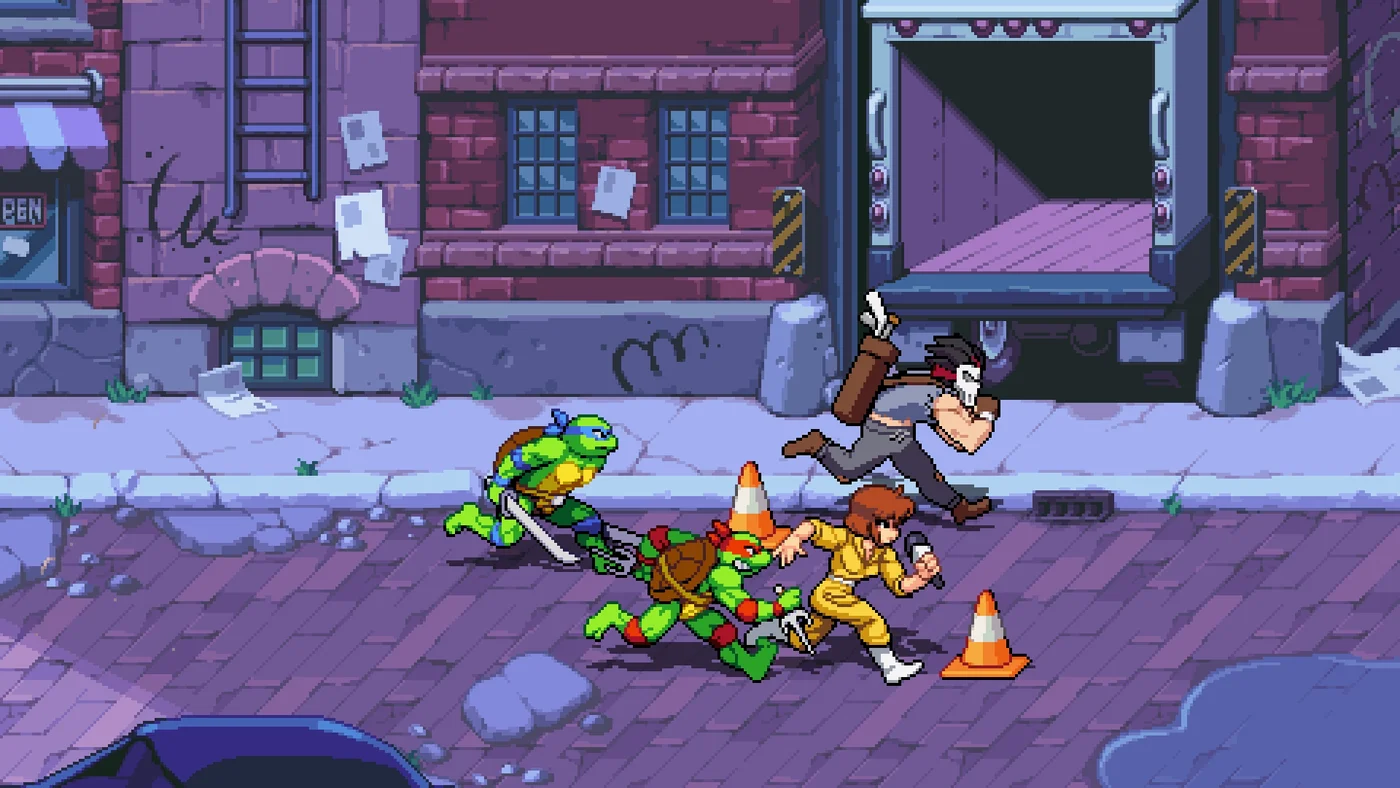
In Shredder’s Revenge, the character select screen gives Raphael 1 range, 2 speed and 3 power. A dodge or running attack helps close the gap. At a distance that favors a staff or sword, his sai will come up short. Dotemu also brought back all four lead actors from the 1987 cartoon, including Rob Paulsen as Raph. In Splintered Fate, quick attacks and critical-hit bonuses suit clustered enemies and close targets. In co-op, another player can cover the angles his attacks miss.
| Game and year | Representative platforms | Playing as Raphael |
|---|---|---|
| Teenage Mutant Ninja Turtles (1989) | NES | Switch among the brothers. Raph’s sai have short reach. |
| Teenage Mutant Ninja Turtles (1989) | Konami arcade, later NES as TMNT II: The Arcade Game | Co-op action with close-range sai attacks. |
| Turtles in Time (1991–1992) | Arcade and SNES | Fight groups and use throws. The SNES version makes its own changes. |
| The Hyperstone Heist (1992) | Genesis/Mega Drive | Take the sai through a campaign that rearranges ideas from the arcade era. |
| Tournament Fighters (1993–1994) | SNES, Genesis/Mega Drive and NES | One-on-one fighting with mechanics, moves and rosters that vary by edition. |
| Teenage Mutant Ninja Turtles (2003) | PS2, GameCube, Xbox, PC and GBA | A 4Kids-era adventure. The handheld game has a separate design. |
| Battle Nexus and Mutant Nightmare (2004–2005) | PS2, GameCube, Xbox and others depending on the title | Action campaigns based on the 2003 show. Handheld versions differ. |
| Danger of the Ooze (2014) | PS3, Xbox 360 and Nintendo 3DS | Exploration game based on Nickelodeon’s series. Switching turtles helps solve different encounters. |
| Mutants in Manhattan (2016) | PS3, PS4, Xbox 360, Xbox One and PC | Quick sai strikes, ninja techniques and team play in the PlatinumGames version. |
| Injustice 2 (DLC, 2018) | PS4, Xbox One and PC | The equipped weapon determines the Turtle. Sai select Raphael. |
| Shredder’s Revenge (2022) | Switch, PlayStation, Xbox and PC, with later editions elsewhere | Short reach and high power. Features Rob Paulsen. |
| Splintered Fate (2023) | Apple Arcade at launch, later Switch, PC and other consoles | A co-op roguelike. Raphael benefits from close hits and critical-hit upgrades. |
| Wrath of the Mutants (arcade 2017, consoles 2024) | Arcade, later PlayStation, Xbox, Switch and PC | Draws on the 2012 series and gives each Turtle different special attacks. |
| Mutants Unleashed (2024) | PlayStation, Xbox, Switch and PC | Continues Mutant Mayhem with distinct Turtle styles and local co-op. |
| Tactical Takedown (2025) | PC at launch, later consoles | Turn-based combat. Position at the end of an attack matters as much as where it starts. |
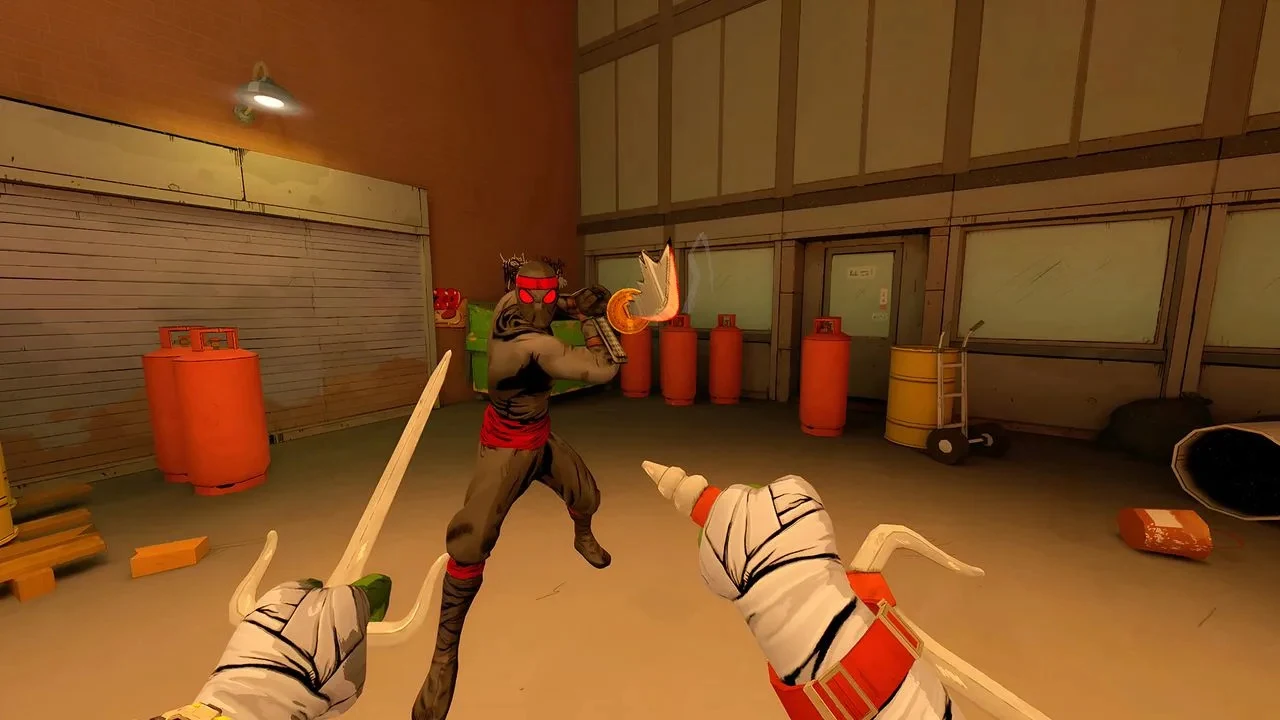
| Empire City (2026) | Meta Quest, Pico and SteamVR | Co-op VR action with Raphael as one of the four playable Turtles. |
Empire City brought the sai into a virtual-reality control scheme in 2026. Splintered Fate continued to receive content and released a physical Legendary Edition on Switch 2. The Cowabunga Collection remains a practical way to compare the Konami titles that shared names even when they played differently at home and in the arcade.
Konami’s Cowabunga Collection · Dotemu’s press kit · Mutants Unleashed · Tactical Takedown · Empire City · Splintered Fate updates
Raphael action figures and collectibles
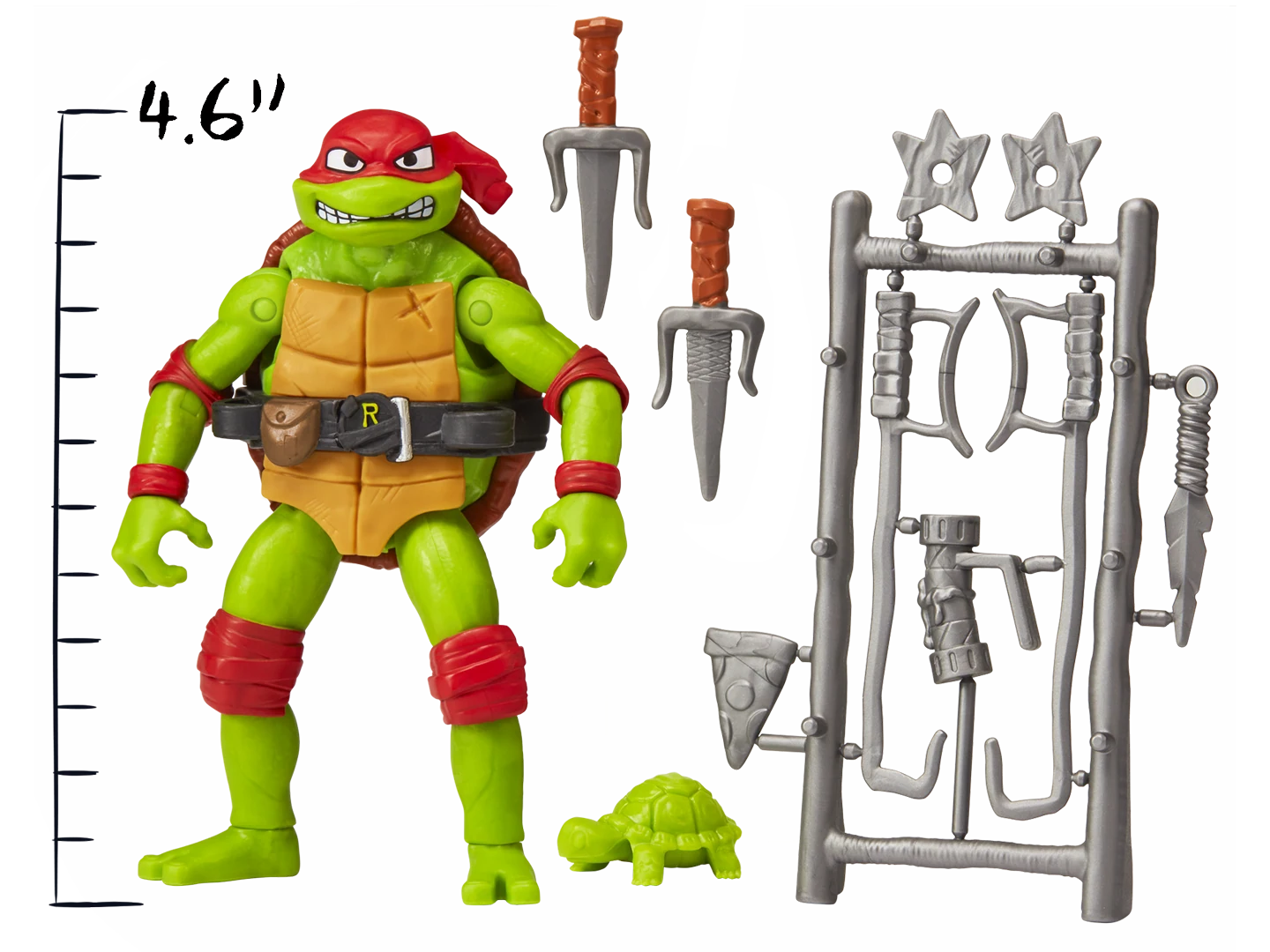
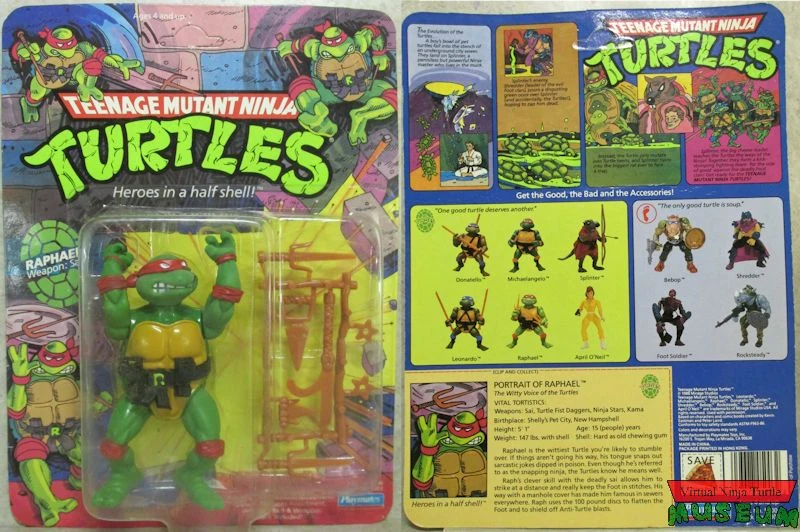
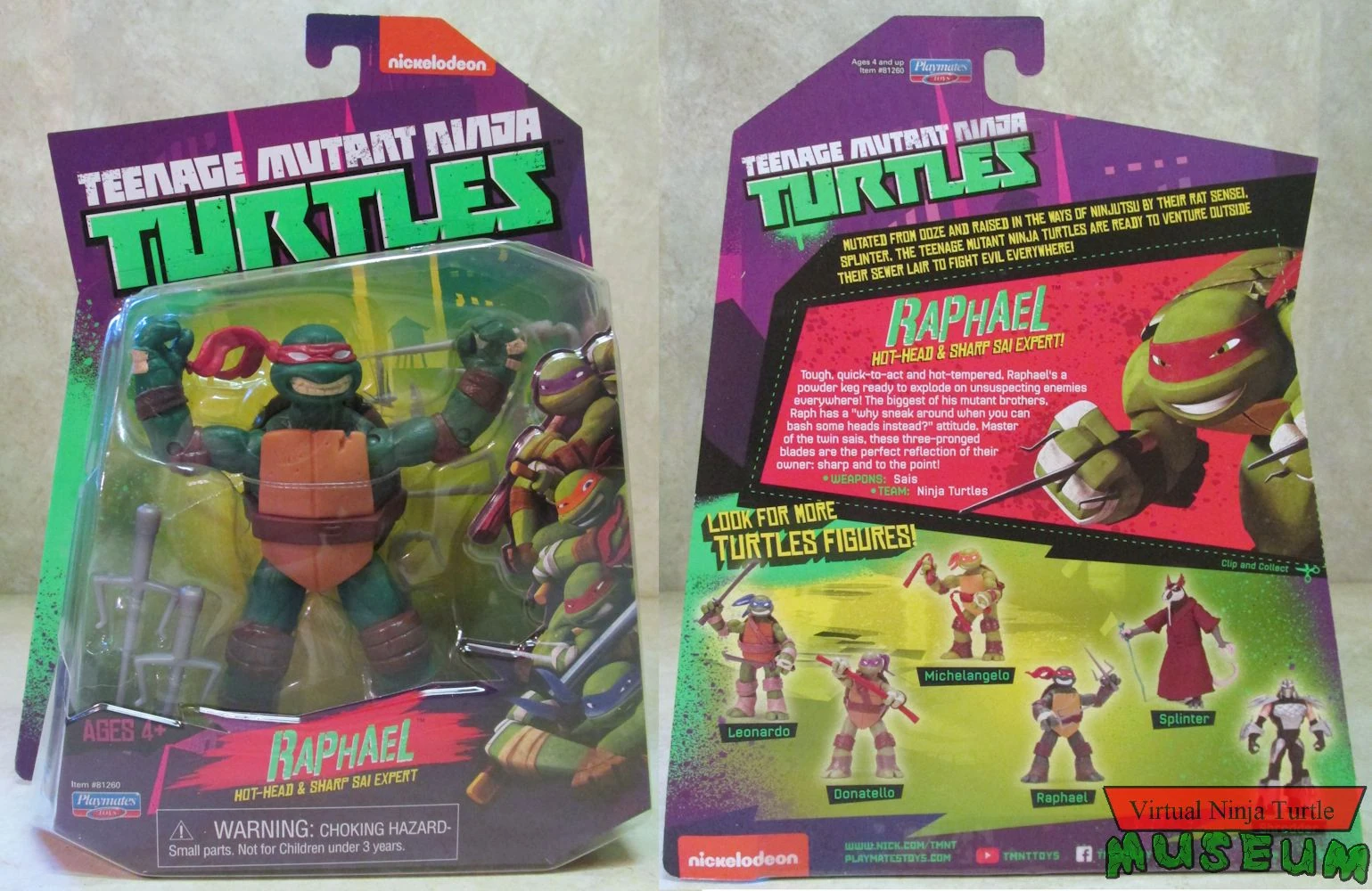
The 1988 Playmates figure established the look for a generation: red mask, a grimace and accessories molded onto a single rack. Early production included softer heads, while other runs used hard heads. The remastered release is a different product, with more articulation. A date molded into the plastic cannot establish a first edition on its own. Compare the card back, belt, accessories and finish with a catalog record.
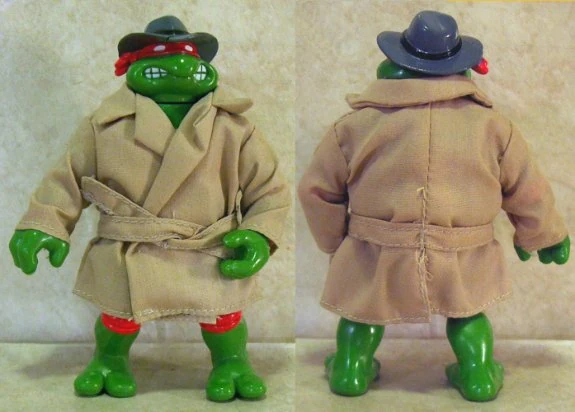
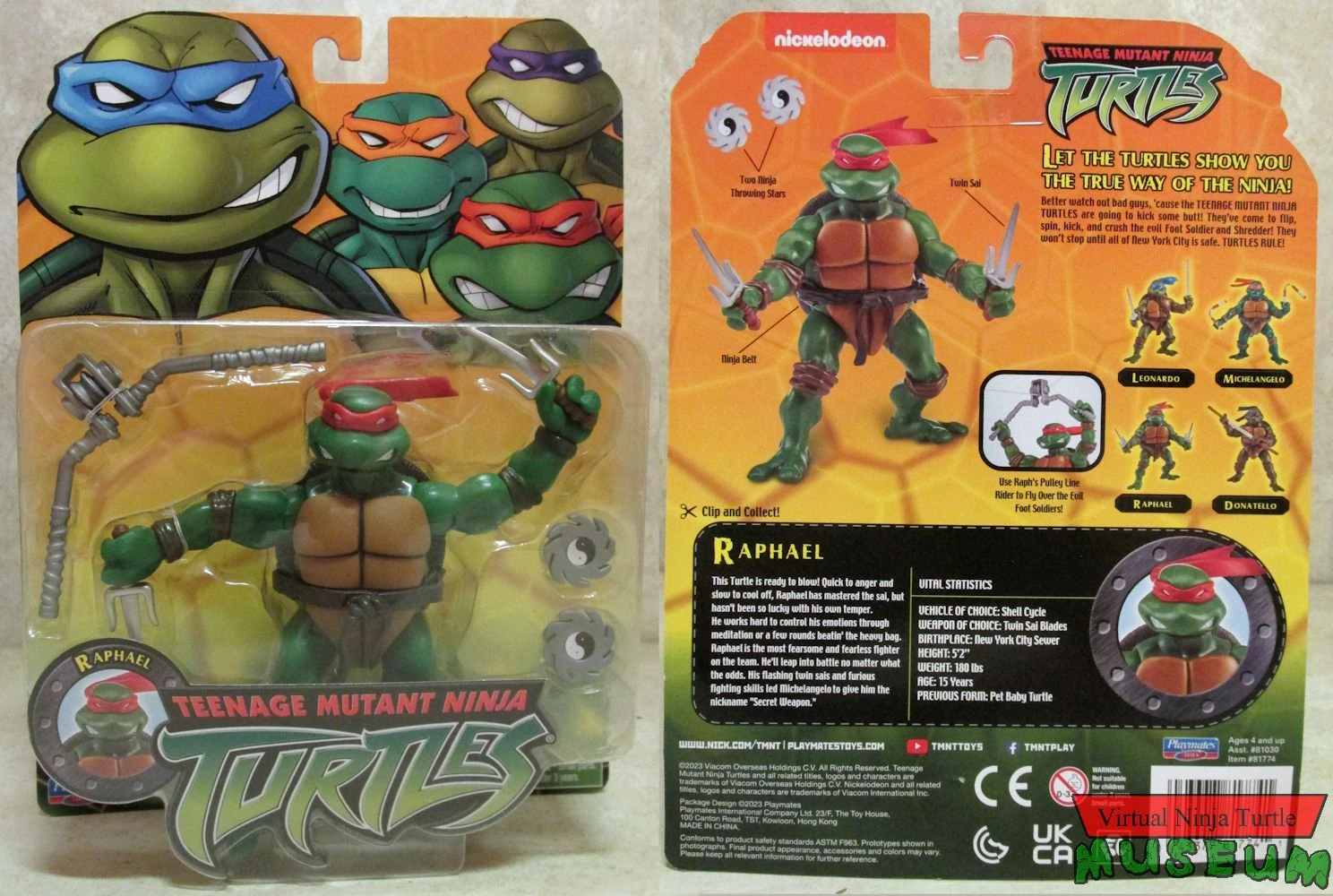
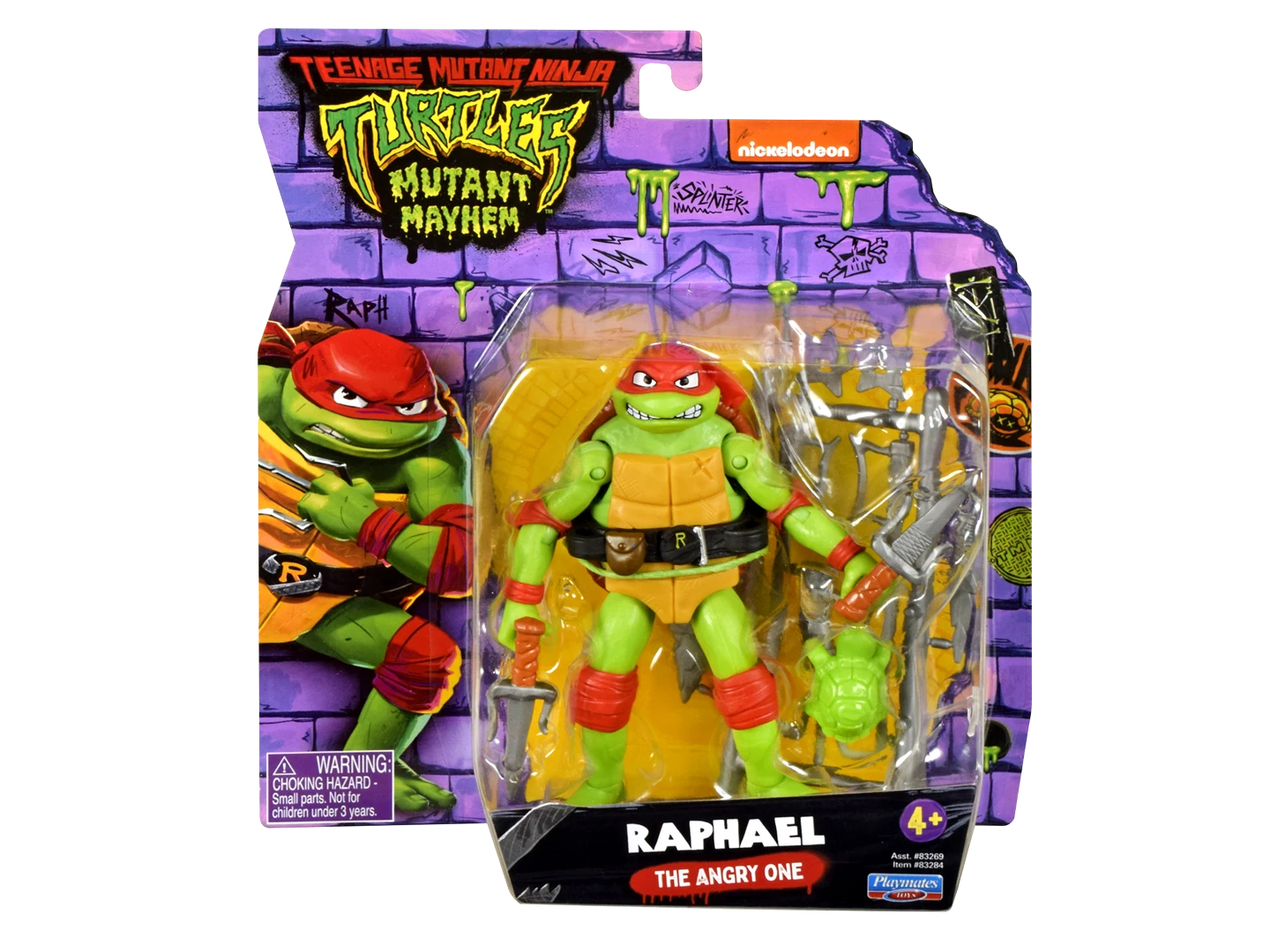
In the 1990s, Movie Star Raphael adapted the film suit, while Undercover Raphael took the trench coat and hat as its starting point. The 2003 series introduced different proportions and later received reissues. The chipped plastron helps identify a loose 2012 figure. The tonfa set Rise apart from most Playmates Raphaels. Mutant Mayhem goes back to sai and uses the movie’s angular character design.
Vintage figures and original packaging
Figures from the animated series and Mutant Mayhem

Collector figures and accessories
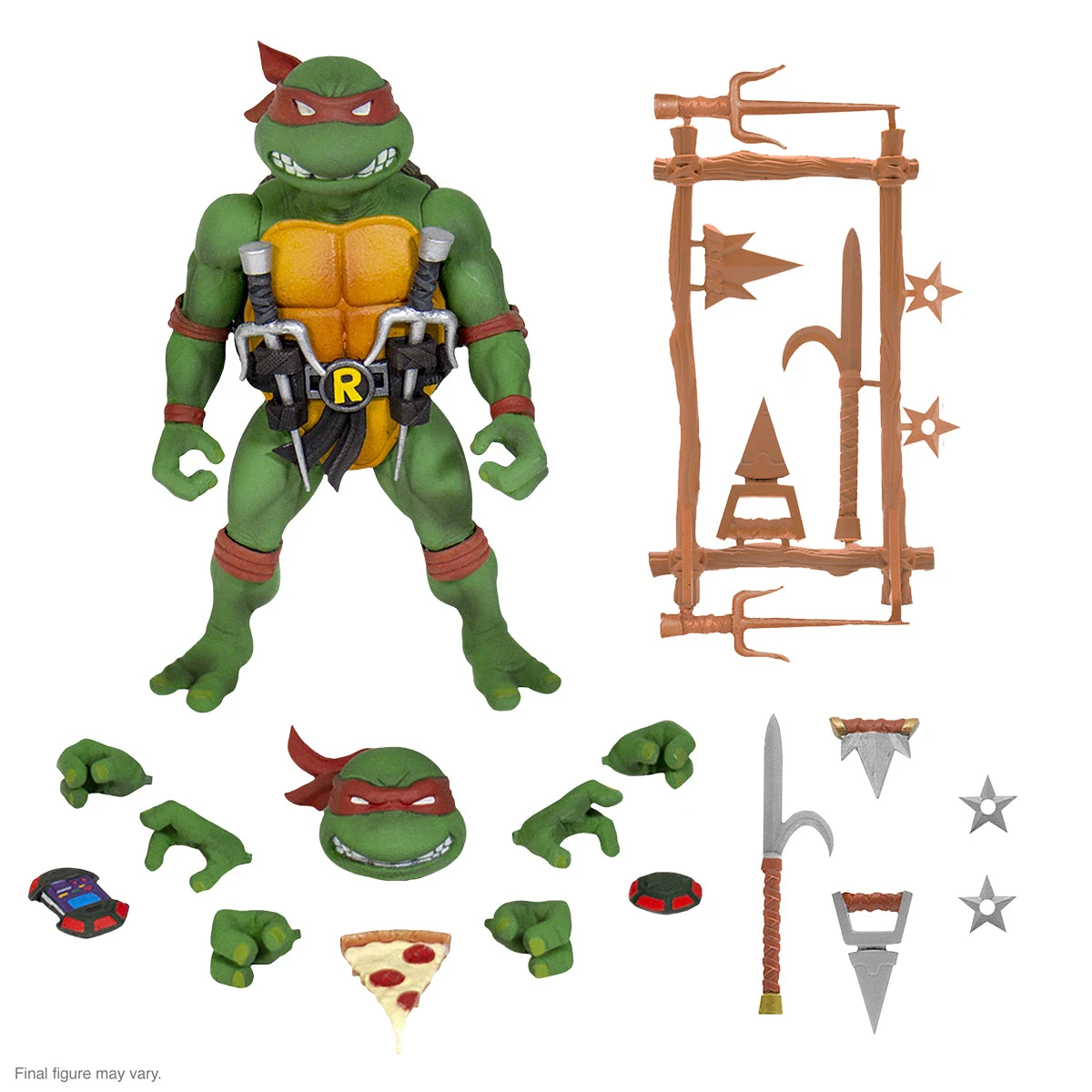

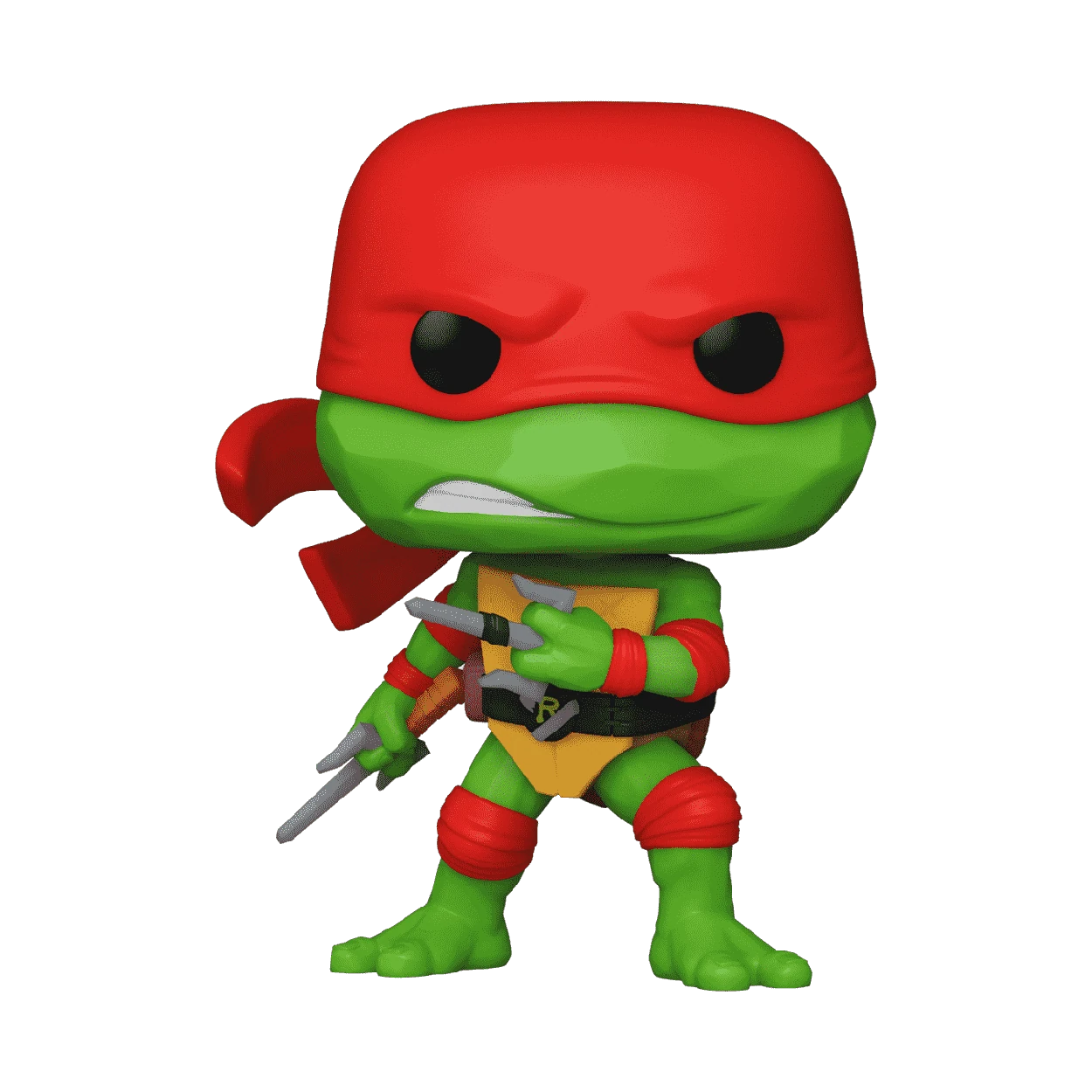
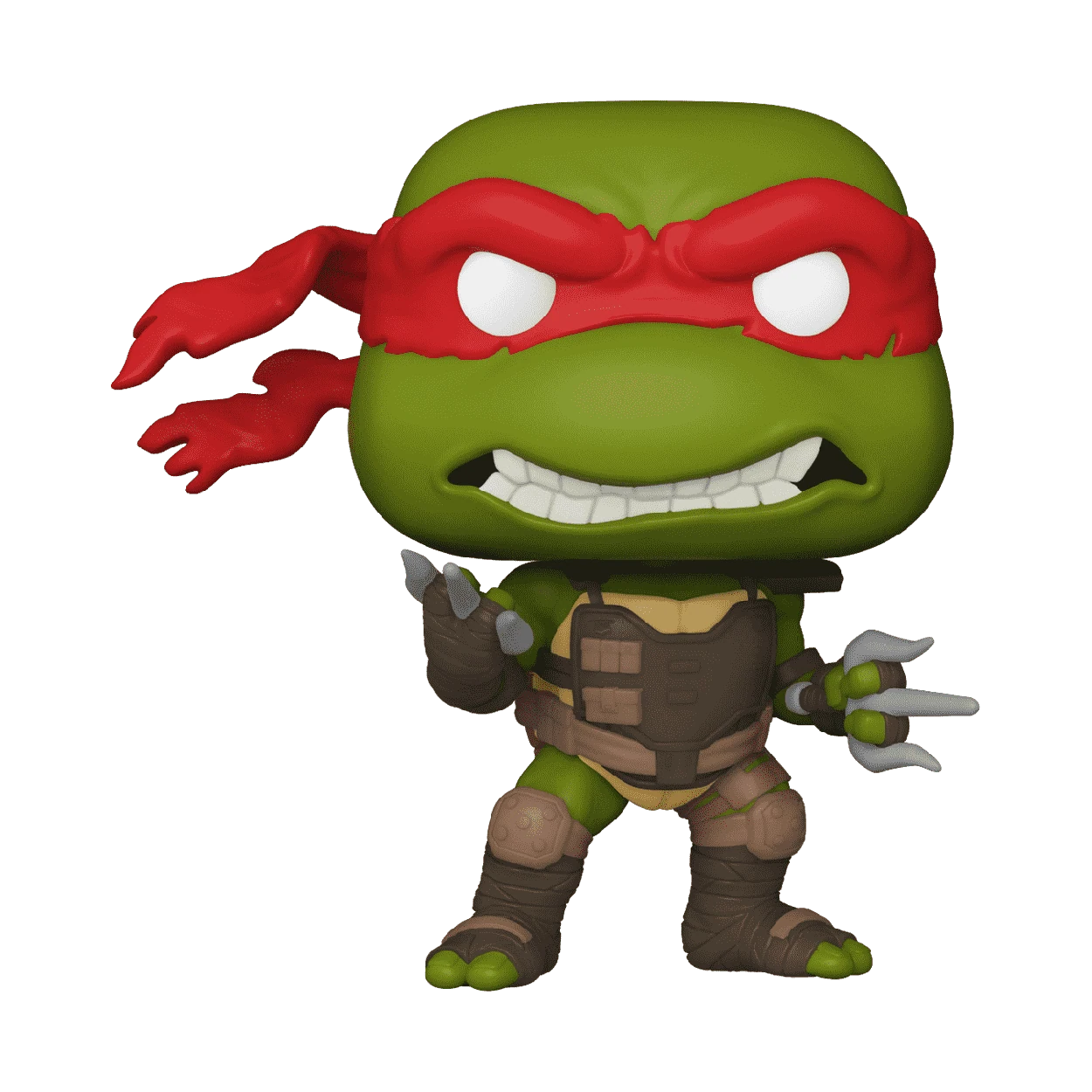
How to identify each release
| Line and maker | What to look for in catalog photos |
|---|---|
| 1988 · Playmates original | Twin sai, a weapon rack and carded packaging. Check the head material and card back. |
| 1989 · Playmates Giant Raphael | Larger body with twin sai. Compare with later Giant reissues. |
| 1990s · Playmates Movie Star and Undercover | A film-suit finish in one line and a trench coat and hat in the other. |
| 2003 · Playmates and reissue | The 4Kids cartoon design. Compare package dates and production markings with the reissue archive. |
| 2012 and 2018 · Playmates | Chipped plastron on the 2012 model. Broader body, jagged shell and tonfa in Rise. |
| 2023 · Playmates The Angry One | 4.6 inches, twin sai, accessory rack and a baby turtle. Ninja Shouts is a separate figure with sound. |
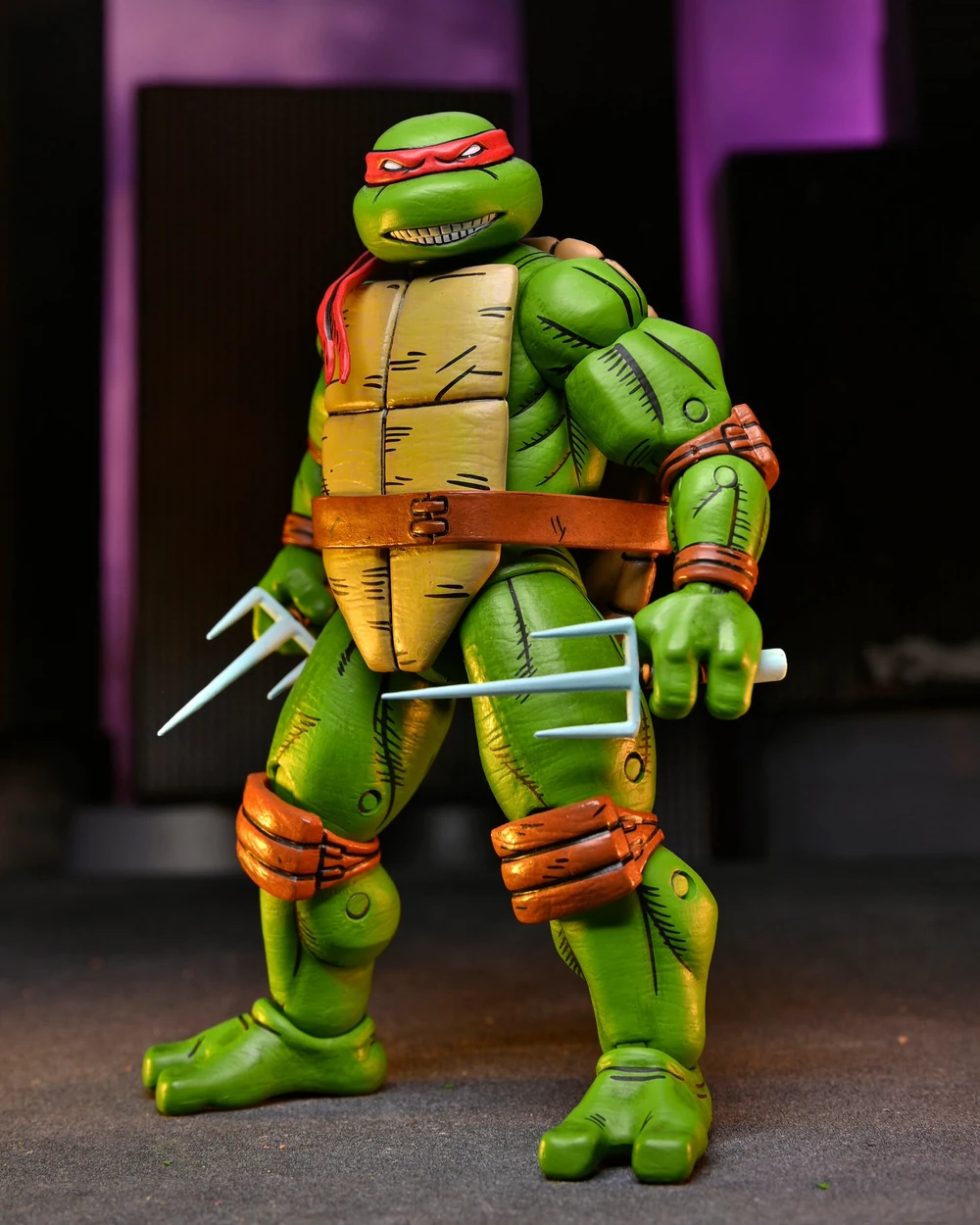
| 2020s · NECA Mirage | Seven-inch scale with comic colors, interchangeable hands and accessories that vary by release. |
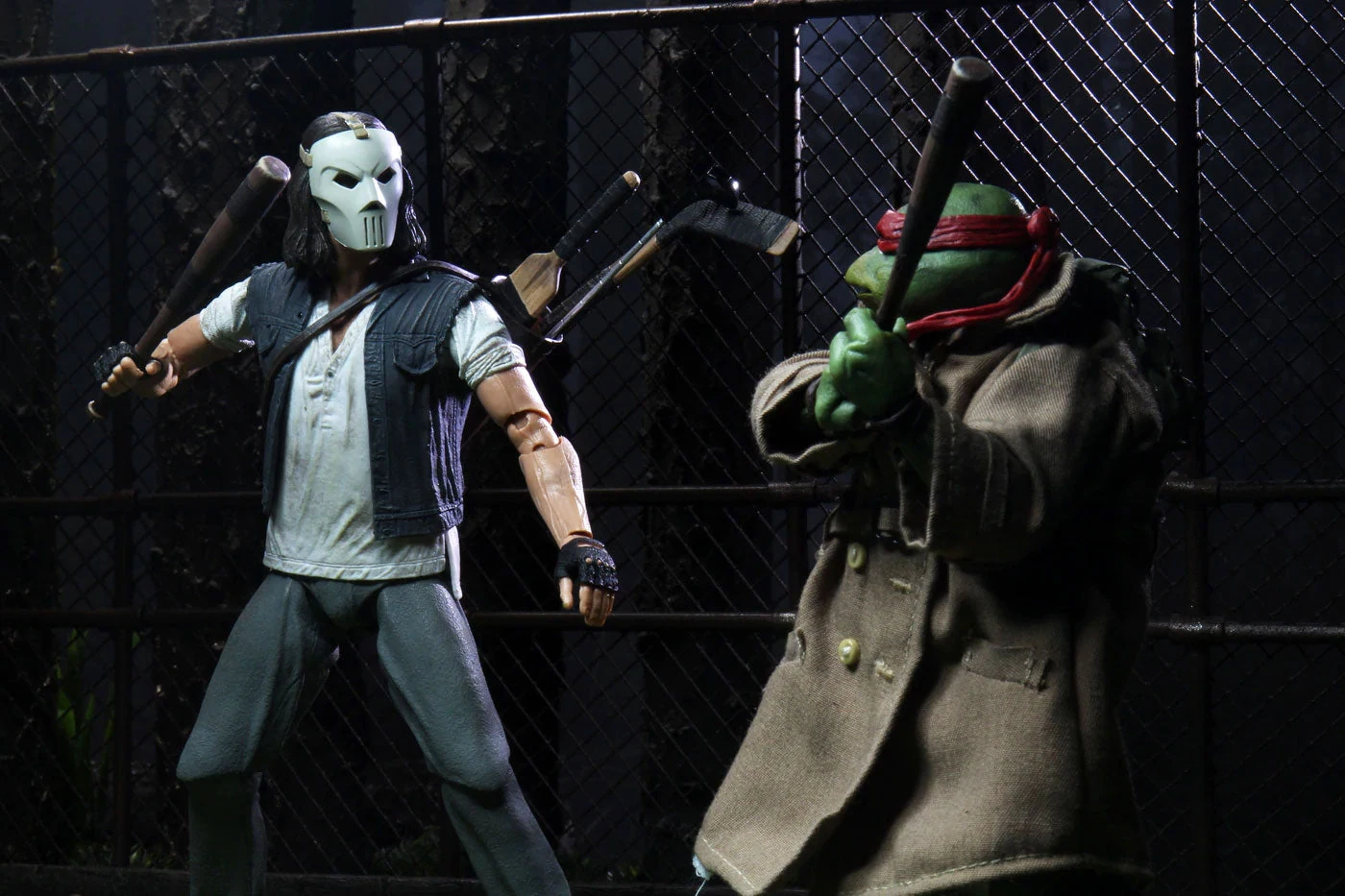
| 2020s · NECA 1990 film | Sculpt based on the film suit. The Casey two-pack has a disguised Raph with a coat and hat. |
| 2020s · Super7 ULTIMATES! Wave 1 | A reinterpretation of the vintage toy with alternate hands, head and weapons depending on the edition. |
| 2020s · Mezco One:12 Collective | Two distinct sets, one with comic styling and one based on the 1990 film. Each contains the four brothers and interchangeable pieces. |
| 2020s · Funko Pop! | Stylized vinyl figures, with separate Classic, Mutant Mayhem, trench coat and The Last Ronin listings. |
| 2026 · Super7 2003 Motorcycle Gear | A variant based on the 2003 show. The Shell Cycle was listed separately and in bundles. |
How to compare two copies. Photograph the front and back of a sealed figure. For a loose figure, check that both sai belong with that particular sculpt. A reissue accessory may fit the older figure without being original to it. Check the retailer and visible package or paint differences for an exclusive. A custom figure can be valuable to the person who commissioned it and should be identified as a custom. Documentation matters more than a seller’s label when identifying a prototype or a scarce production variant.
Who voices and plays Raphael?
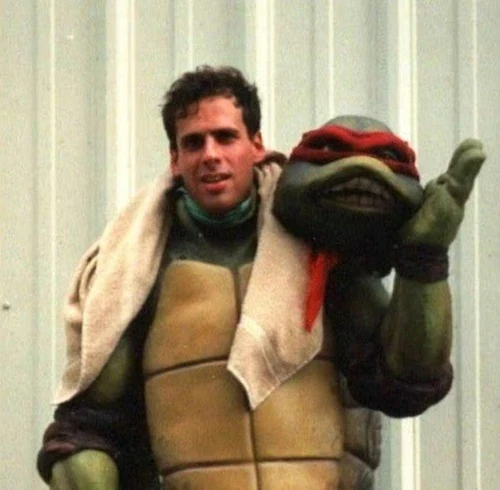
The original credits distinguish between voice work, acting inside a suit and performance capture. Josh Pais did the first two jobs in 1990, while the sequels split them across different performers. Dubs vary by region and release.

| Actor | Production | Performance |
|---|---|---|
| Rob Paulsen | 1987 series and Shredder’s Revenge (2022) | Principal English voice through most of the original series. Returned for Dotemu’s game. |
| Michael Gough | 1987 series, final season (1996) | English voice of Raphael in season ten. |
| Josh Pais | Teenage Mutant Ninja Turtles (1990) | Voice and suit performance. Also appears as a taxi passenger. |
| Kenn Scott and Laurie Faso | The Secret of the Ooze (1991) | Suit performance and voice, respectively. |
| Matt Hill and Tim Kelleher | Teenage Mutant Ninja Turtles III (1993) | Suit performance and voice, respectively. |
| Matt Hill | The Next Mutation (1997–1998) | English voice in the live-action show. |
| Greg Abbey | 2003 series | English voice for the 4Kids version. |
| Nolan North | TMNT (2007) | Voice of Raphael and his Nightwatcher alter ego. |
| Sean Astin | 2012 series | English voice. Rob Paulsen plays Donatello in this adaptation. |
| Alan Ritchson | 2014 and 2016 movies | Voice and motion-capture performance. |
| Omar Benson Miller | Rise (2018) and its 2022 movie | Voice of the eldest brother and initial team leader. |
| Darren Criss | Batman vs. Teenage Mutant Ninja Turtles (2019) | English voice in the animated crossover. |
| Brady Noon | Mutant Mayhem (2023) and Tales (2024–2025) | English voice of the teenage Raphael in this continuity. |
Details worth looking for on a rewatch or reread
The rooftop ambush switches brothers. If you remember Raphael taking a beating at the hands of the Foot, that is the 1990 movie. Mirage uses Leonardo for the scene. The change helps explain why Steve Barron’s movie spends so much time on Leo and Raph’s relationship after the ambush.
One voice actor switched brothers. Rob Paulsen plays Raphael in 1987 and Donatello in 2012. Trans-Dimensional Turtles brings both casts together. Hearing them side by side makes it easier to pick out the older Raph’s sarcasm and Sean Astin’s more guarded performance.
The eye patch, helmet and plastron have separate histories. Archie’s older Raph wears the patch. The Image run gives him the facial injury, while the 2012 CG design has the chipped plastron. Image’s Shredder helmet and the Nightwatcher helmet serve separate purposes, too. One puts him inside a Foot power struggle, while the other lets him patrol the city on his own.
What Raphael brings to the Ninja Turtles
Raphael pushes the team to discuss decisions it might otherwise take for granted. He asks how long they can afford to wait when somebody is in trouble and who keeps taking on the risk. Sometimes he gets it wrong and another brother has to pull him out. When he takes responsibility, as he does with Casey in Mirage or Splinter in 2007, the story finds something that a tally of fights won would miss. That is how the wisecracker of 1987, the leader of Rise and the teenager in Mutant Mayhem can all feel like Raphael.
Frequently asked questions about Raphael
What is the red Ninja Turtle’s name?
Raphael. His brothers and friends usually call him Raph, and Spanish versions may call him Rafael.
What weapons does Raphael use?
He carries a pair of sai. The traditional metal weapon has a central shaft and two side prongs. He starts Rise with twin tonfa and later uses sai.
Why is Raphael always angry?
His temper often comes out when he wants to protect someone, defend his independence or deal with an immediate threat. The 1987 show often channels those tensions into sarcasm, while other adaptations have him act before the rest of the team is ready.
Is Raphael stronger than Leonardo?
Several versions give Raphael more raw strength. Leonardo usually excels at technique and coordinating the team. In Rise, Raphael is the oldest and biggest brother. The story determines how much those differences matter in a fight.
Is Raphael the leader of the Ninja Turtles?
He starts Rise as team leader. Leonardo leads in many other adaptations and takes over at the end of the Rise series.
Who is Raphael’s girlfriend?
Ninjara is his partner in Archie, Mona Lisa in the 2012 series and Alopex in IDW. The 1987 Mona Lisa is a different character with the same name.
Who is Raphael’s best friend?
Casey Jones is the human friend most closely associated with him. The friendship begins in the Mirage one-shot and turns up again in the 1990 film and 2003 series.
How old is Raphael, and what kind of turtle is he?
He is usually a teenager, though exact ages vary and some stories depict him as an adult. He is a snapping turtle in Rise. Many adaptations just identify him as a mutant turtle.
Why does Raphael wear a red mask?
In Mirage’s color art, all four brothers wore red. The 1987 cartoon and the toys made different colors the norm, and Raphael kept red.
What happens to Raphael in The Last Ronin?
The second issue reveals his fate. The key moments section gives the details under a spoiler warning.
Is Raphael the Nightwatcher?
Yes. In TMNT (2007), Raphael takes on the Nightwatcher identity to fight crime without his brothers.